The short answer
For most Toronto homes — and almost every condominium — European engineered hardwood is the better choice. It stays more stable through humid summers and dry, heated winters, it can be installed over concrete and radiant heating, and it is what makes wide planks practical. Solid hardwood still has a place, mainly when you are extending or matching an existing solid floor in an older house with a wooden subfloor.
It is one of the questions we hear most often in our Castlefield showroom, usually right after a client has fallen for a particular board: is this solid wood, and does it matter? Both are real hardwood floors. The difference is in how each board is built — and in Toronto, with its wide swings in temperature and humidity, that construction matters more than most people expect.
What is the difference between engineered and solid hardwood?
Solid hardwood is exactly what it sounds like: every board is a single piece of wood, typically around three-quarters of an inch thick, milled with a tongue and groove and nailed down to a wooden subfloor.
Engineered hardwood is built in layers. The top layer — the wear layer — is real hardwood, the surface you see, touch and walk on. Beneath it sits a multi-layer core, with the layers set so their grain runs in different directions. That cross-layered construction is what restrains the natural tendency of wood to swell and shrink with moisture.
Why Toronto's climate is the deciding factor
Wood is hygroscopic: it takes on moisture from the air and gives it back, expanding and contracting as it does. Toronto gives a floor a hard time on both counts. Summers are warm and humid; winters bring months of forced-air heating that can drive indoor humidity right down. A floor has to live through that cycle every single year.
Solid boards respond to those swings across their full thickness. In practice that can mean gaps opening between boards in winter, and edges cupping upward in a humid August. The cross-layered core of an engineered board resists that movement, which is why engineered floors hold their shape so much better through the seasons. The Thornhill Estate our team completed is a good example: its flooring was specified as 100% European-made engineered plank, chosen precisely to withstand Canadian humidity shifts.
Whichever you choose, the floor will reward you for keeping indoor humidity within the range its manufacturer specifies — commonly somewhere around 35–55% relative humidity. In Toronto that usually means a humidifier in winter and air conditioning or a dehumidifier in summer.
Wide planks are an engineered story
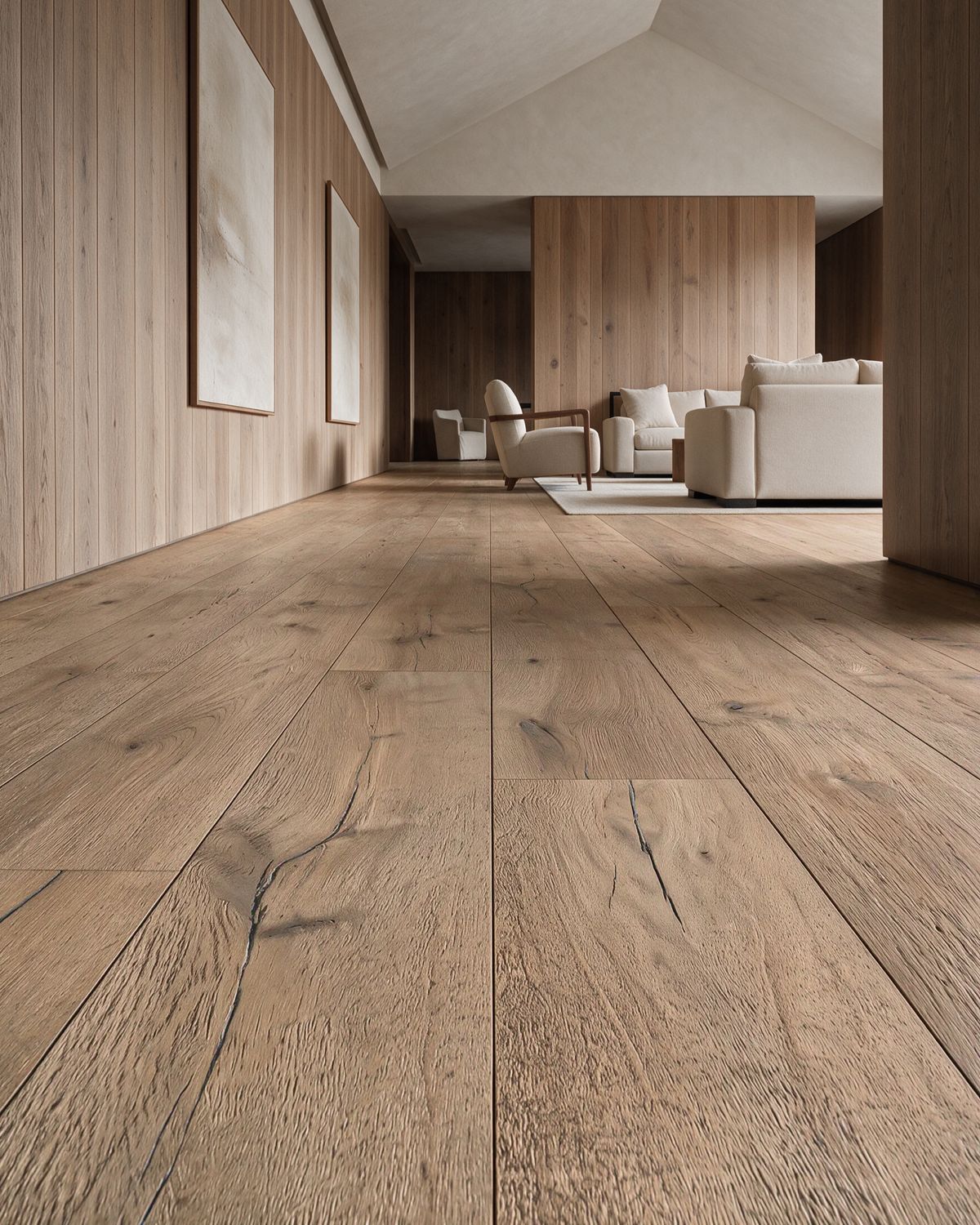
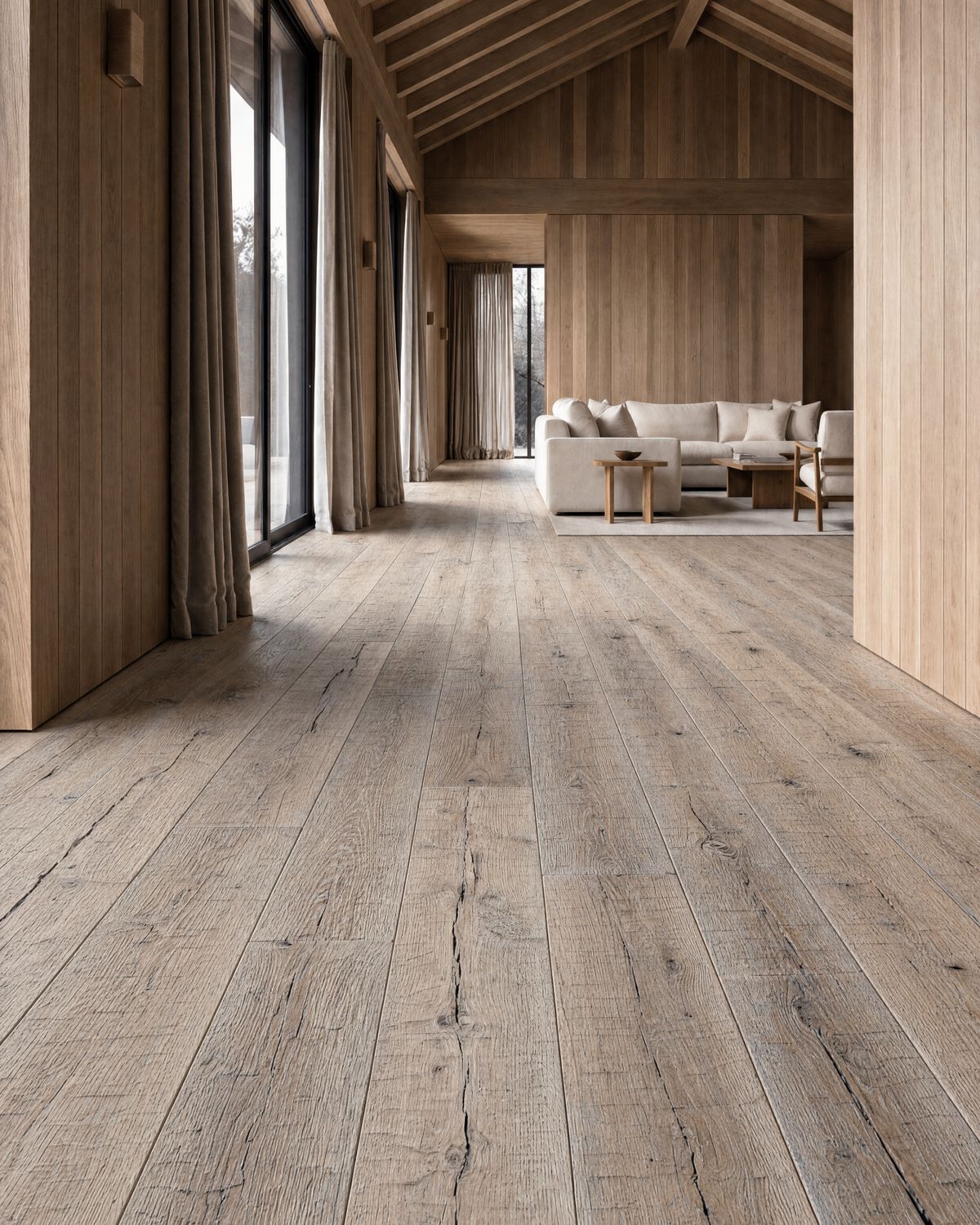
The wider the board, the more it moves. That is simple physics, and it is why truly wide planks — the 7-, 8- and 10-inch boards that define so many contemporary Toronto interiors — are almost always engineered. A 10-inch solid board is far more prone to cupping and gapping than a narrow strip floor.
It is also why wide plank was a turning point for this company. Starting in 2001, Khayeri was among the first to bring multi-layered and wide-plank engineered flooring to the Canadian market. Today our Memories of Scandinavia and Memories of Versailles collections are offered in wide plank, and our Bespoke program goes further still, with custom widths, end grain and pattern work. If you are drawn to long, wide boards, engineered is the construction that lets them stay beautiful.
Concrete subfloors, condos and basements
Solid hardwood is nailed down, so it needs a wooden subfloor of plywood or similar. It cannot be fastened directly to concrete, and it is generally not recommended below grade, where moisture conditions are harder to control.
Engineered hardwood is far more versatile. Depending on the product, it can be glued directly to a concrete slab, nailed or stapled to a wooden subfloor, or installed as a floating floor over an underlay. That flexibility is what makes it the default choice for:
- Condominiums — almost all Toronto condos are concrete construction, and most condominium corporations require an approved acoustic underlay that meets a minimum sound rating. Always check your building's rules before you order.
- Basements and lower levels — where solid wood is not recommended.
- Additions and renovations that mix an old wooden subfloor with a new concrete slab, so one floor can run continuously through both.
Radiant floor heating
Hydronic radiant heating has become a fixture of Toronto custom homes and major renovations — and it is one of the clearest dividing lines between the two. Engineered hardwood is generally the right choice over radiant heat: its stable core copes far better with the repeated warming and cooling of a heated slab. Every manufacturer sets limits — a maximum surface temperature and a gradual start-up schedule — and those instructions should be followed to the letter. Solid hardwood is generally not recommended over in-floor heating.
Refinishing and lifespan
This is solid hardwood's traditional advantage: a three-quarter-inch board can be sanded and refinished several times over its life. With engineered hardwood, the number of possible refinishes depends on the thickness of the wear layer. A thin veneer may not be sandable at all; a generous wear layer can be sanded and refinished, much like solid.
Two practical points narrow the gap. First, most of a floor's day-to-day wear is in the finish, not the wood, so a floor can often be renewed by recoating rather than sanding. Second, oiled finishes can be spot-repaired and re-oiled in place without sanding the whole room. When you compare floors, ask for the wear-layer thickness and the finish system — they tell you more about a floor's long-term life than the word "solid" or "engineered" on the box.
Look, feel and sound
Once installed, you cannot tell the two apart by looking: the surface of an engineered board is real hardwood, with the same grain, character and texture. The feel underfoot depends mostly on the installation method. A nailed-down or glued-down floor feels solid and quiet; a floating floor relies on the quality of its underlay to avoid a hollow sound. That is why we specify the installation method room by room rather than by habit.
Sustainability
Premium European oak grows slowly. Because an engineered board uses that oak only for its wear layer, the same tree yields far more finished floor than it would as solid boards. When comparing floors, also look for independent certification of the wood and the finish. Many of our collections carry recognized certifications, including FSC and PEFC for responsible forestry and the EC-1 emissions standard for ultra-low VOC emissions. You can read more on our sustainability page.
What about cost?
Both engineered and solid floors span a wide range of prices, and construction is rarely the biggest factor. Species, grade, board width and length, the finish, and especially the pattern — herringbone and chevron take more material and more labour — drive most of the difference, along with the installation method and the condition of the subfloor. The most reliable way to compare is a quote based on your actual floor plan, which we are happy to prepare after a showroom consultation.
Engineered vs solid hardwood at a glance
| Engineered hardwood | Solid hardwood | |
|---|---|---|
| Construction | Real-wood wear layer over a cross-layered core | One piece of wood throughout |
| Stability in Toronto's climate | High — resists seasonal gapping and cupping | Lower — moves more with humidity |
| Wide planks (7"+) | Well suited | Prone to cupping |
| Over concrete / condos | Yes — glue-down or floating | Not directly over concrete |
| Basements (below grade) | Yes, with the right product and preparation | Not recommended |
| Radiant floor heating | Generally suitable, within the maker's limits | Generally not recommended |
| Refinishing | Depends on wear-layer thickness | Several times over its life |
| Best for | Most homes, condos, wide plank, patterns, radiant heat | Matching existing solid floors over wood subfloors |
So which should you choose?
- A condo in Yorkville or downtown: engineered, glued down or floated over the acoustic underlay your building approves.
- A custom build or full renovation with radiant heating — in Forest Hill, Lawrence Park or anywhere else: engineered wide plank.
- A finished basement or lower level: engineered.
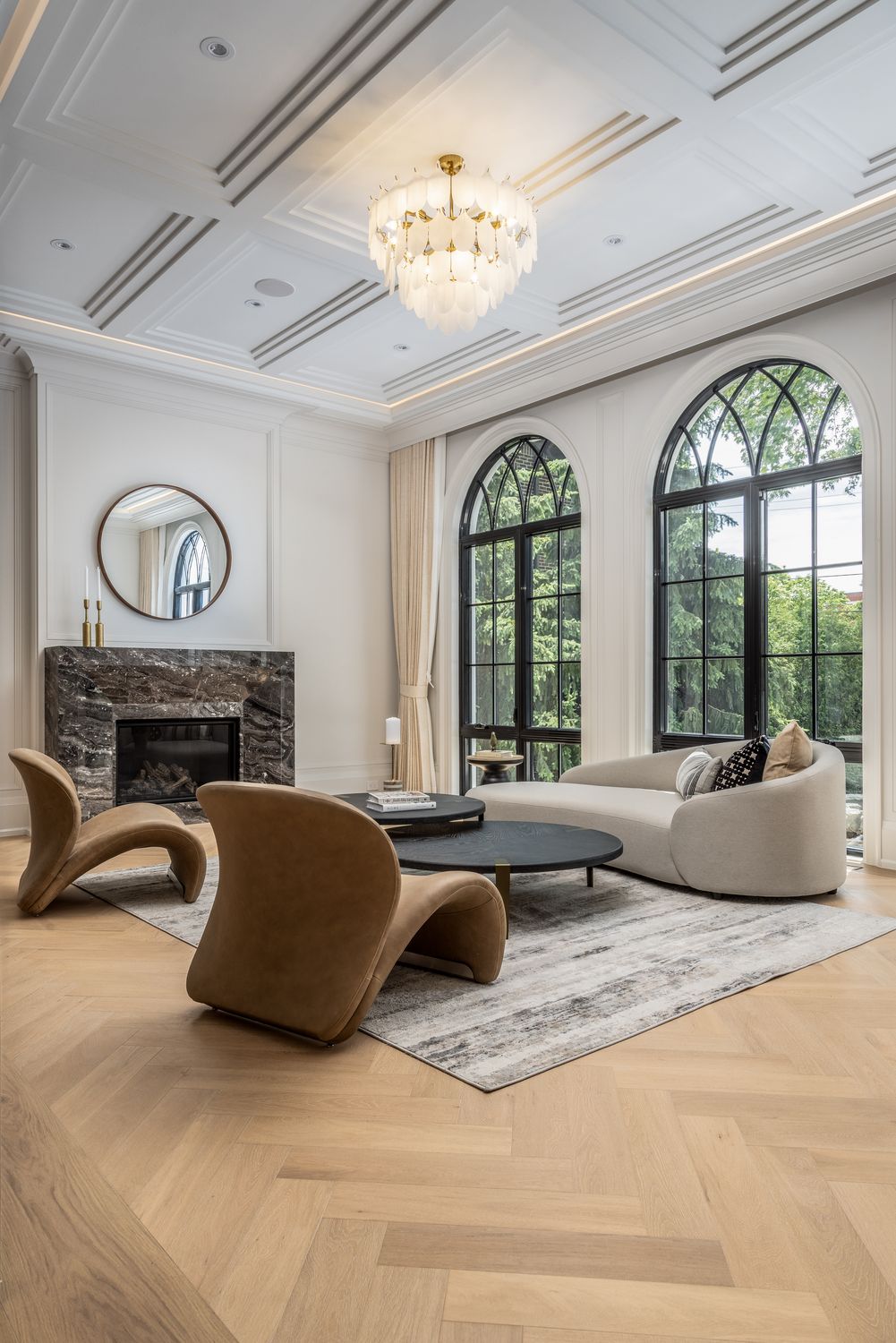
- A herringbone or chevron statement floor: engineered patterns stay precise and stable.
- Extending an existing solid strip floor in a century home: solid may match more closely — or consider refinishing the whole level so the old and new read as one.
How we approach it at Khayeri
Khayeri's collections are European engineered hardwood, from the pale wide planks of Memories of Scandinavia to the character oak of Memories of Versailles and the reclaimed, end-grain and pattern work of our Bespoke line. Before installation, we look at the subfloor, its moisture and the way the floor will flow from room to room, and we specify the installation method for each space. Every Khayeri floor is backed by a lifetime warranty, with installation by our certified in-house team.
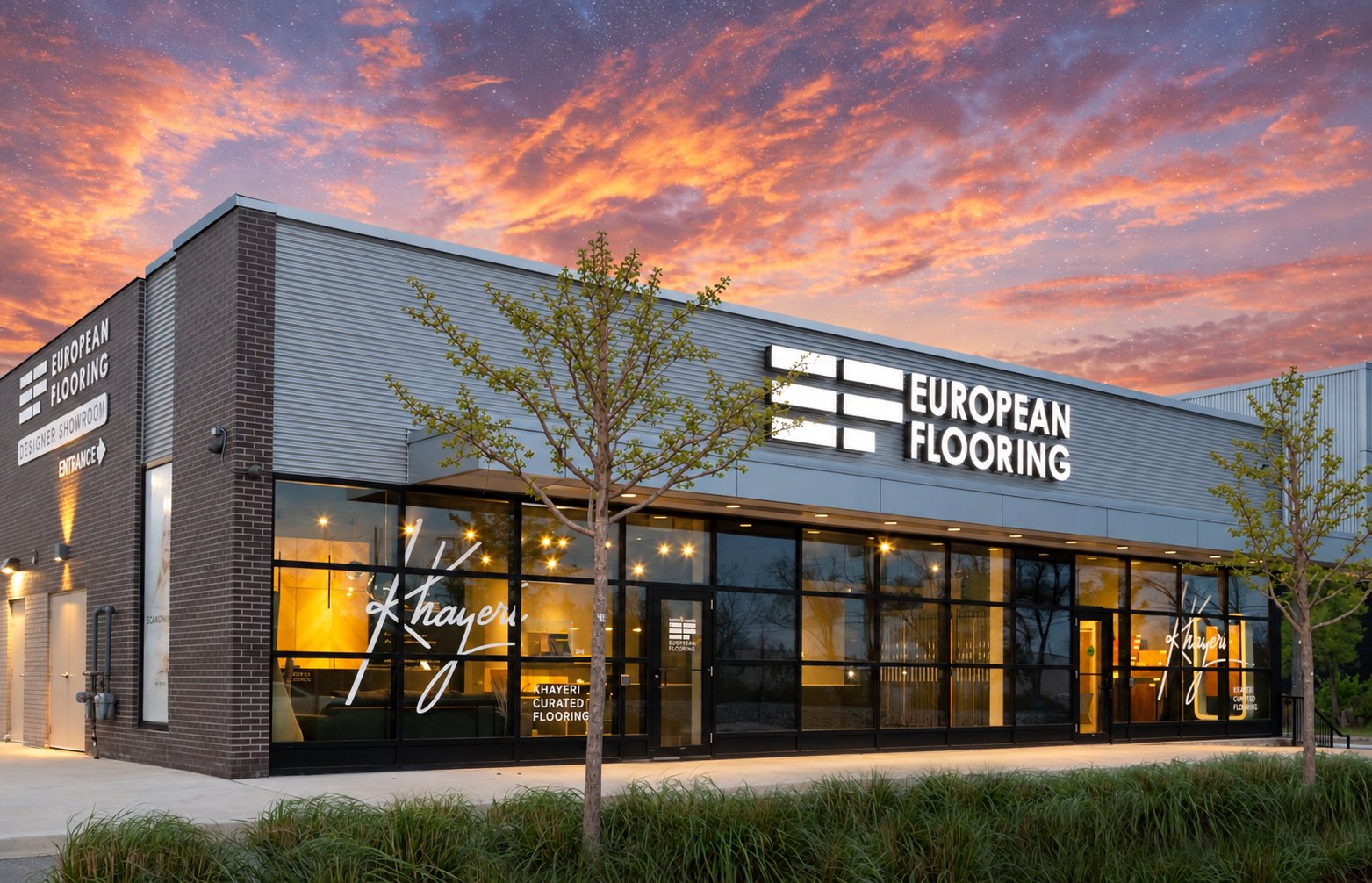
The best way to decide is to stand on the boards. Our showroom on Castlefield Avenue lets you compare full-size planks and finishes side by side — book a private consultation, or explore more in the Khayeri Journal.
Further reading: installation and care guidance from the National Wood Flooring Association (NWFA), of which Khayeri is a member; forest certification from FSC Canada and PEFC.
Frequently asked questions
Is engineered hardwood real hardwood?
Yes. The top layer of an engineered board is real hardwood — the same wood, grain and texture as a solid board — bonded to a cross-layered core that keeps it stable.
Can engineered hardwood be refinished?
Usually, yes. How many times depends on the thickness of the wear layer. Many floors can also be renewed by recoating the finish, and oiled floors can be spot-repaired without sanding.
Which is better over radiant floor heating?
Engineered hardwood. Its cross-layered core handles the heating cycles far better than solid wood. Always follow the manufacturer’s surface-temperature limits and start-up schedule.
Can I install solid hardwood in a Toronto condo?
Generally not. Most condos have concrete subfloors and require an approved acoustic underlay, which is why engineered hardwood, glued down or floated, is the standard choice. Check your building’s rules first.
Does engineered hardwood look different from solid?
No. Once installed, the surface is the same real wood. Differences in feel come mostly from the installation method, not the construction.

Khayeri Curated Flooring — founded by Mehran Khayeri, Khayeri has curated luxury European engineered hardwood in Toronto since 2001, from its showroom at 1310 Castlefield Avenue. Members of the National Wood Flooring Association (NWFA); every floor is installed by our certified in-house team and backed by a lifetime warranty.