Forest Hill is one of Toronto's most established neighbourhoods: tree-lined streets around Forest Hill Village, deep lots, and a housing stock built largely in the 1920s and 1930s — Georgian, Tudor Revival and English-cottage homes — alongside a steady stream of new custom builds. A floor in Forest Hill has two jobs. It has to respect the architecture of the house, and it has to stand up to real family life for decades.
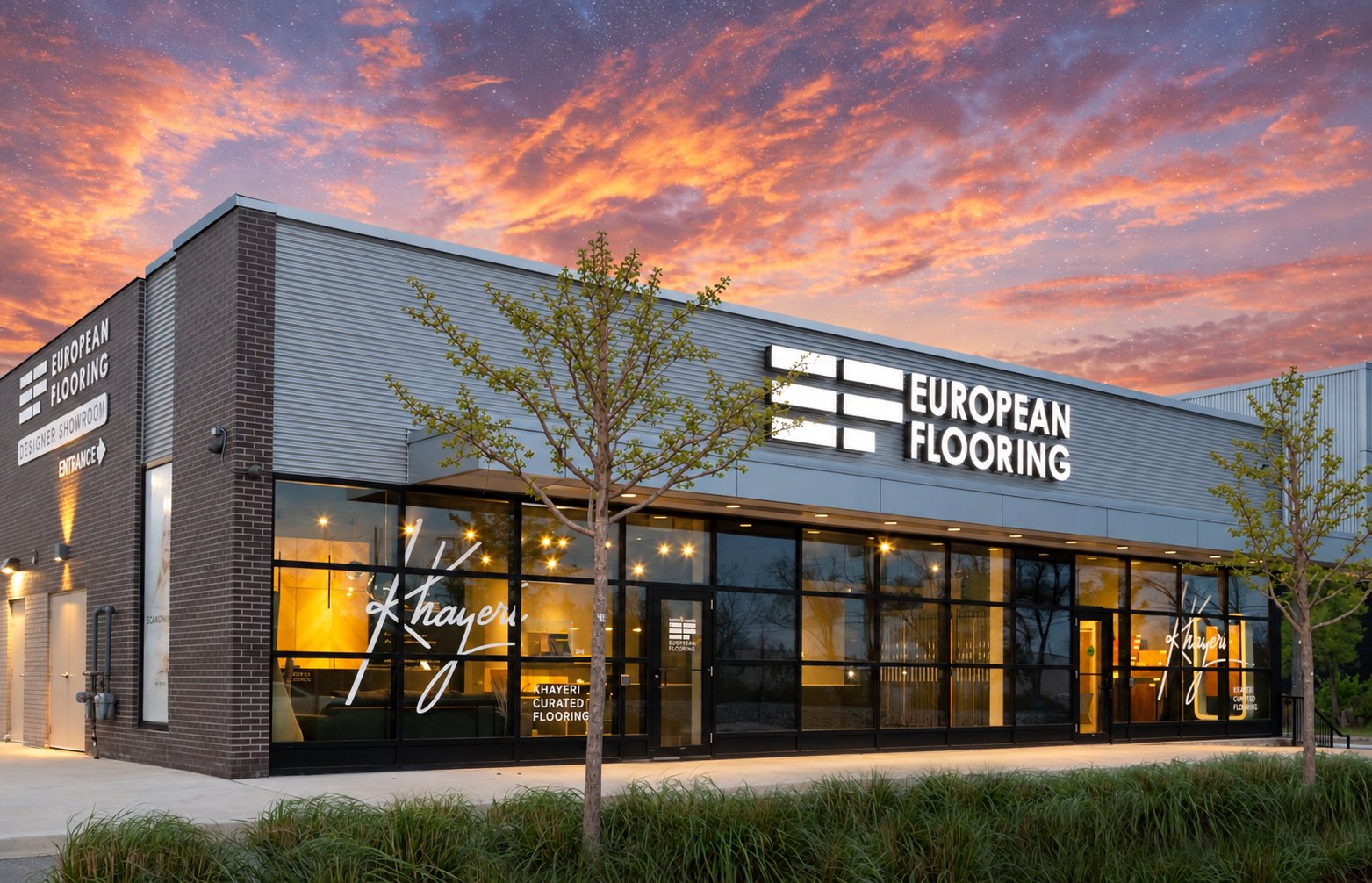
For twenty-five years, Khayeri Curated Flooring has supplied European engineered hardwood to Toronto homeowners, designers and builders from our showroom in the Castlefield Design District, just a short drive north-west of Forest Hill. This page explains how we approach Forest Hill projects — from period restorations to complete rebuilds — and how to choose a floor that suits your home.
Floors that suit Forest Hill architecture
The right floor starts with the house. A few patterns we see again and again:
Georgian and centre-hall homes
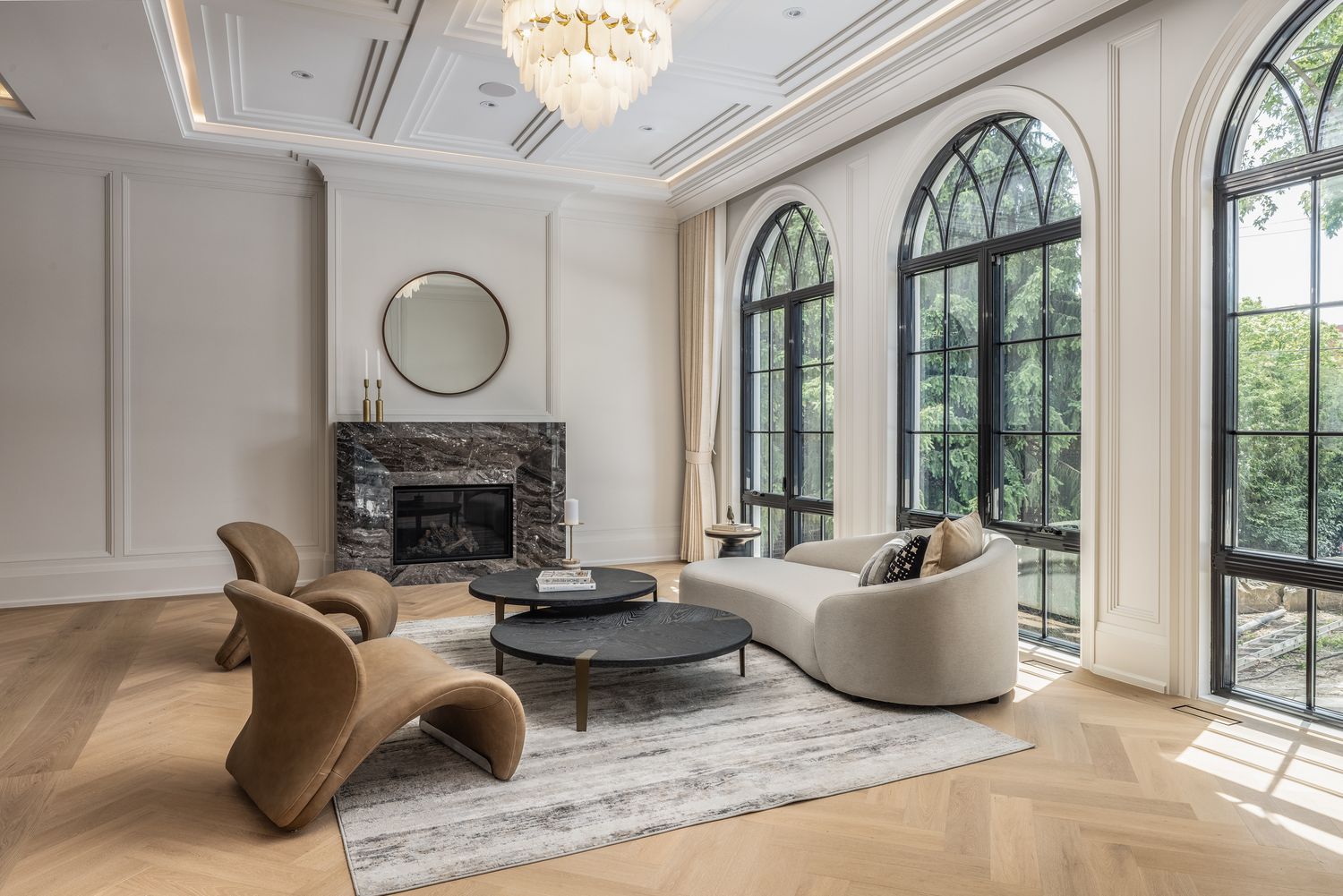
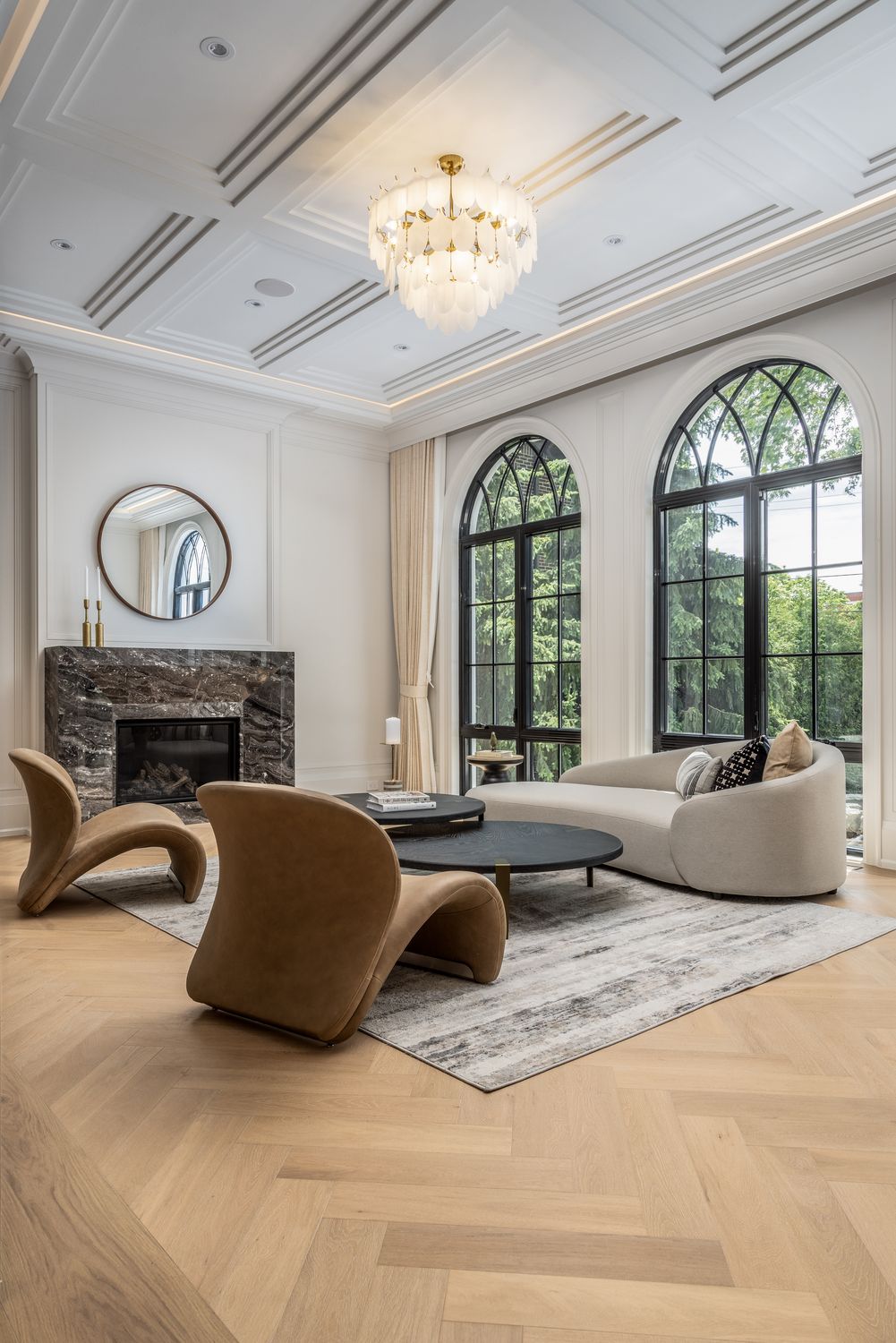
Symmetrical, formal and full of light, Georgian Revival houses suit floors with a sense of order. Herringbone or chevron in the front hall and dining room, running into wide plank through the principal rooms, gives the plan a natural hierarchy. Our Memories of Versailles collection — French-inspired character oak in Chateau and Palace grades — was made for exactly this kind of interior, with warm, hand-finished boards that bring classic depth.
Tudor Revival and English-cottage homes
Leaded glass, dark millwork and plaster detailing call for oak with character: visible grain, natural knots and warmer tones. For owners who want genuine age underfoot, our Reclaimed collection offers historic French white oak recovered from a 300-year-old barn in Lower Brittany — boards whose patina simply cannot be manufactured.
New custom builds
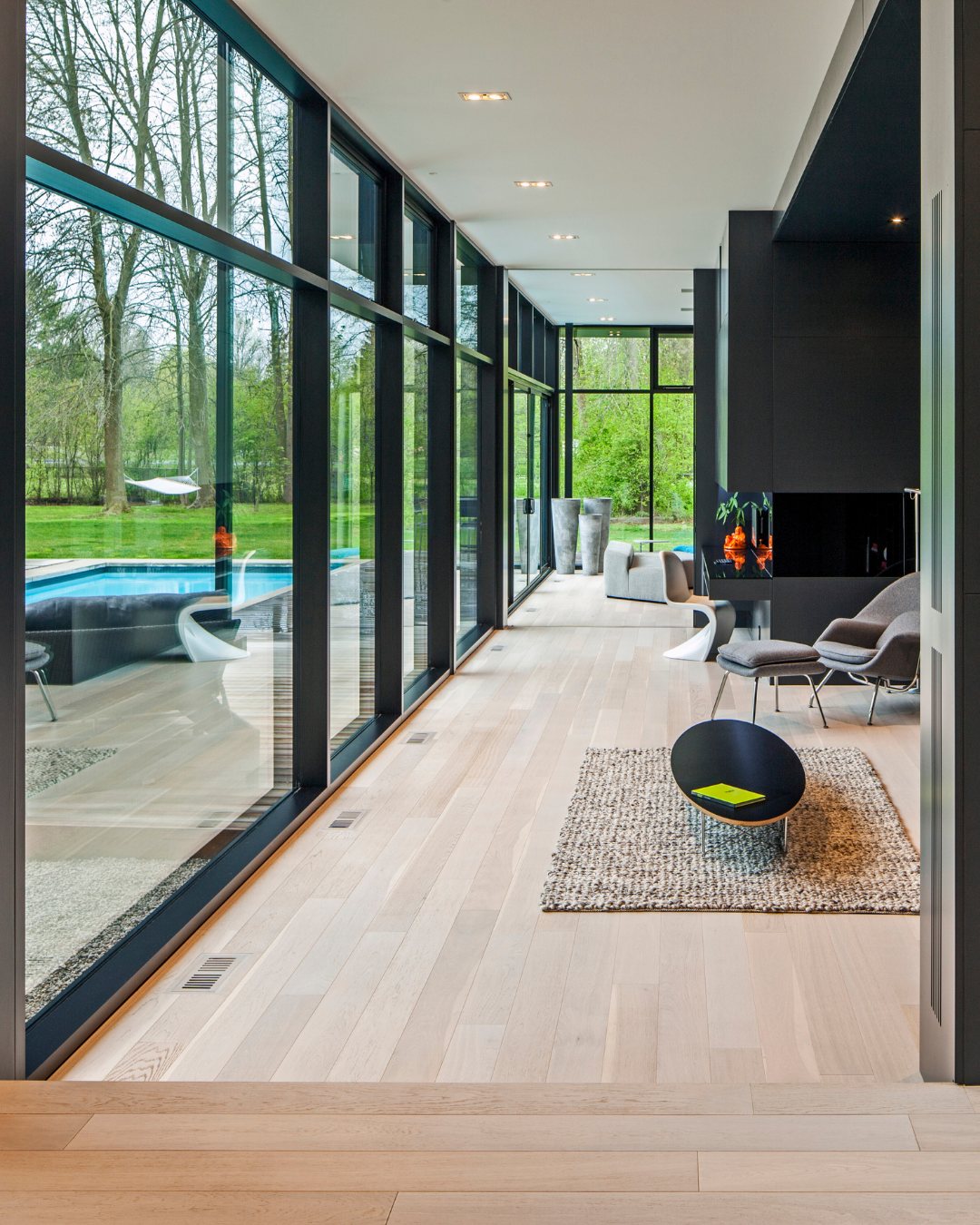
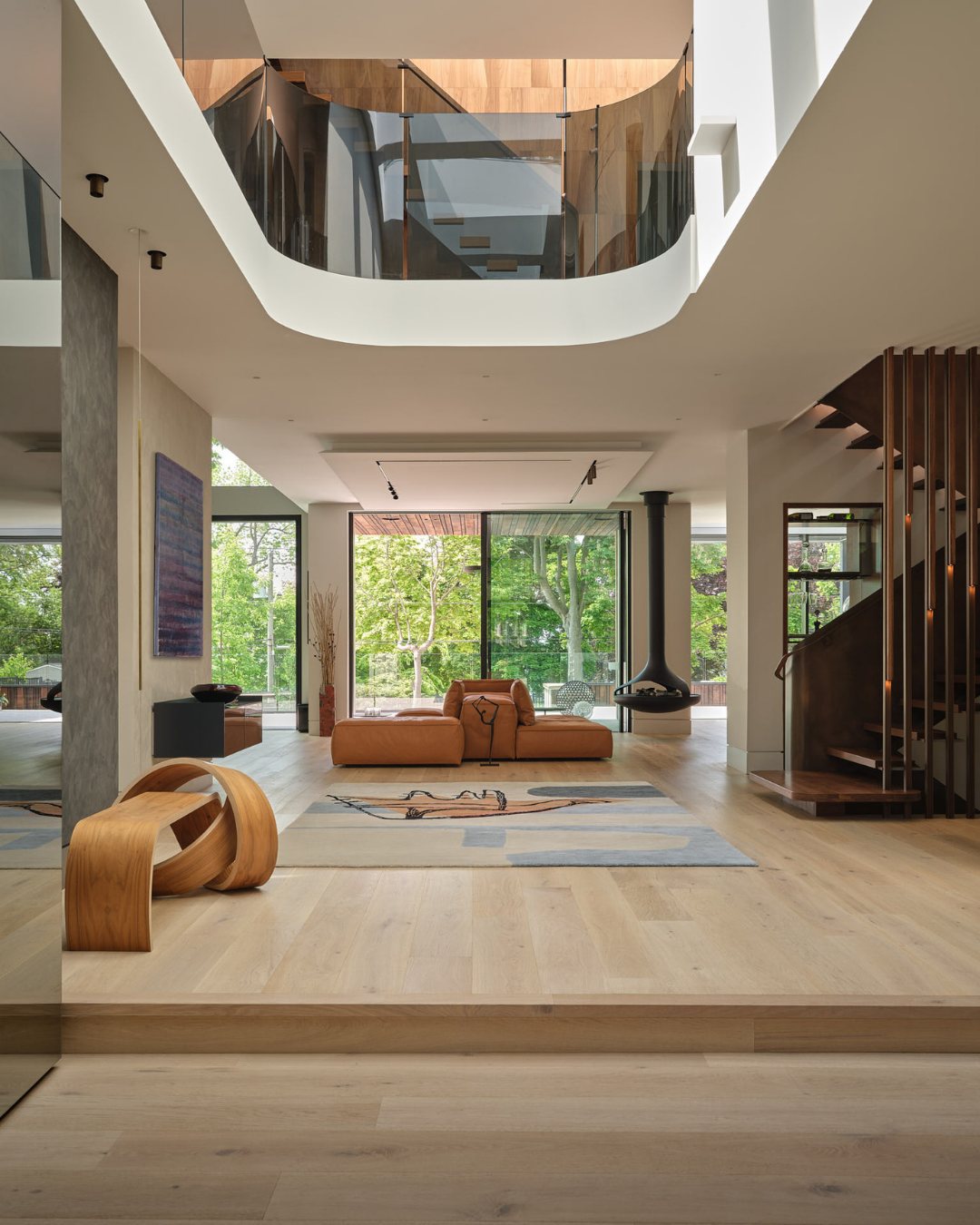
Many Forest Hill lots now carry contemporary homes with open plans, large windows and minimal detailing. Here, the calm, pale wide planks of Memories of Scandinavia let architecture and light lead, while a Bespoke pattern or end-grain floor can turn a single room — a library, a dining room, an entry — into a statement.
Renovating an older Forest Hill home: what to plan for
A ninety-year-old house rewards care. Before any flooring decision is final, these are the questions worth answering:
- What is under the existing floor? Older homes often have plank subfloors, uneven joists or several generations of patching. The subfloor should be assessed — and moisture-tested — before installation, so the new floor goes down flat and stays that way.
- Will old and new construction meet? Additions frequently combine an original wooden subfloor with a new concrete slab. European engineered hardwood can be installed over both, so one floor can run continuously through the house.
- Is radiant heating part of the plan? In-floor heating is common in Forest Hill renovations. Engineered hardwood is generally the right choice over radiant heat; solid wood generally is not. Our guide Engineered vs Solid Hardwood explains why.
- How will stairs, landings and thresholds meet the floor? Planning these details at the design stage is what makes a floor read as one continuous surface rather than a series of rooms.
- How dry does the house get in winter? Forced-air heating can pull indoor humidity down sharply. Engineered boards are far more stable through that cycle, and a humidifier keeps any wood floor happiest.
Wide plank, herringbone or both?
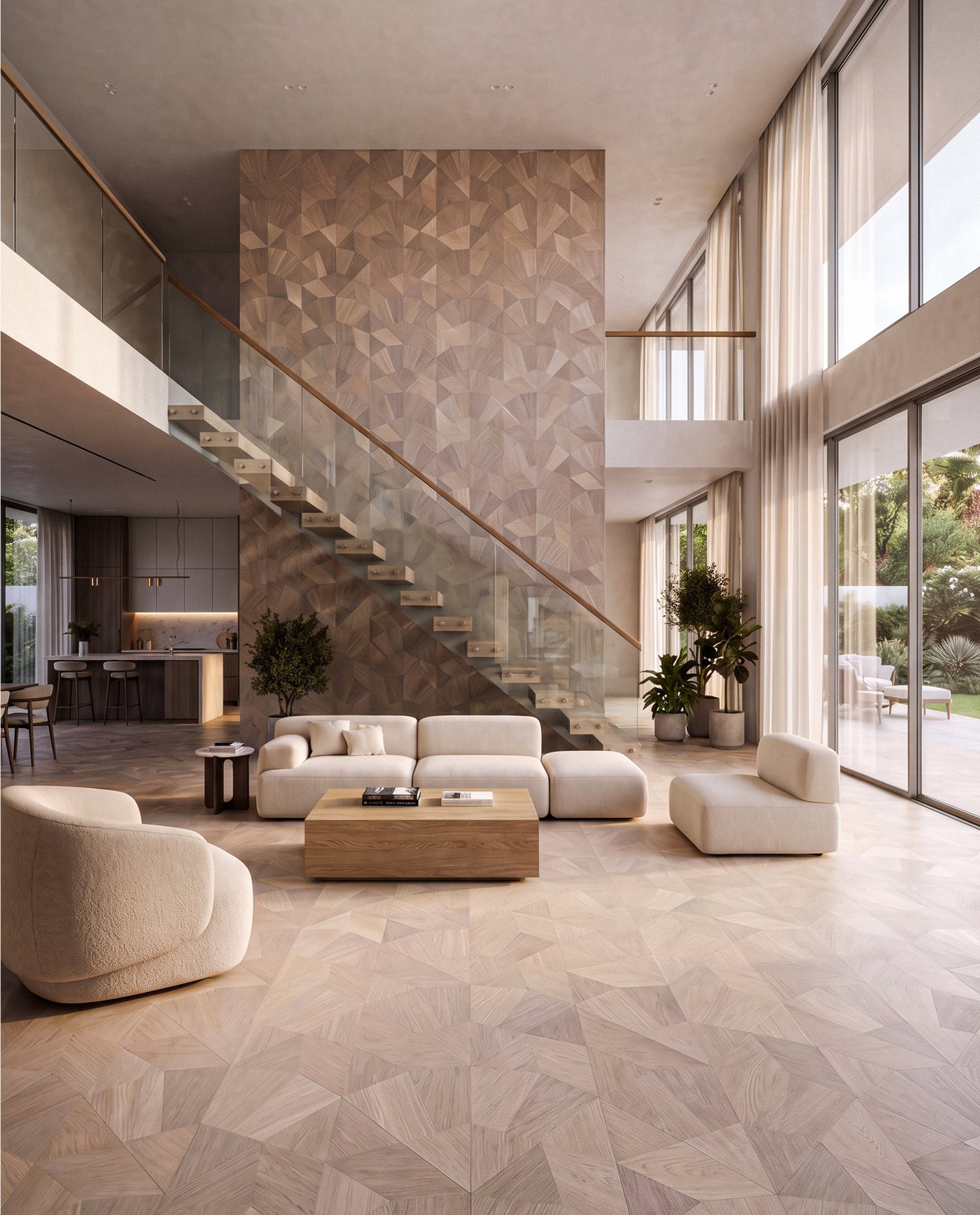
Wide plank and pattern are not competing choices. Some of the most successful interiors we have completed combine them: wide boards for the living spaces, with herringbone defining the entry or dining room, both finished in exactly the same tone so the change in pattern adds movement without breaking the harmony of the house. That approach — 10-inch custom ultra-wide European plank with tailored herringbone in a matching tone — is what our team delivered at the Thornhill Estate, and it translates beautifully to the scale of a Forest Hill home. If you are weighing the two patterns, read The Difference Between Herringbone and Chevron Flooring in our journal.
Choosing a collection
Oiled or lacquered? Choosing a finish for family life
The finish shapes how a floor looks and how it lives. Oiled finishes soak into the wood and leave a natural, matte surface that feels warm underfoot; a scratch or worn patch can usually be spot-repaired and re-oiled without sanding the whole room, though the floor benefits from periodic maintenance oil. Lacquered finishes form a protective film on the surface, so everyday care is simpler, but a deep scratch generally means recoating a whole area rather than a single board. In busy Forest Hill households — children, dogs, constant entertaining — we often suggest seeing both side by side in the showroom before deciding, because the right answer depends on how you live as much as on how the floor looks.
Caring for your floor through a Toronto year
A little routine goes a long way. In winter, road salt and grit are a hardwood floor's worst enemies, so plan generous mats and a boot tray at every entrance and wipe up slush promptly. Keep indoor humidity steady with a humidifier while the heating runs, and with air conditioning in the humid months. Put felt pads under chairs and furniture, use a dry dust mop or a vacuum with a hard-floor setting, and clean only with products approved for your finish — never a steam mop or standing water. Our journal article How to Avoid Damage to Your Hardwood Flooring covers the essentials.
How a Forest Hill project works with Khayeri
- Private showroom consultation. Visit our Castlefield gallery by appointment to see full-size boards, compare finishes side by side and talk through your plans one-on-one.
- Samples and design coordination. Take samples home to see them in your own light, and bring in your designer or architect — we work alongside your team.
- Site assessment. We look at the subfloor, moisture levels and layout so the floor is specified correctly for every room.
- Installation by our certified in-house team. One team, start to finish — no hand-offs.
- Aftercare. Every Khayeri floor is backed by a lifetime warranty, and we are here to help you care for it for years to come.
Close to home
Our showroom at 1310 Castlefield Avenue sits in the Castlefield Design District, near Dufferin Street between Eglinton and Lawrence — a straightforward drive from Forest Hill. Consultations are private and by appointment, so you have the gallery — and our attention — to yourself. Call (416) 967-9200 or book online.
To make the most of your visit, bring floor plans or measurements if you have them, photos of the rooms, and samples of anything the floor needs to live with — a stone, a cabinet door, a paint colour or a piece of fabric. If a designer or architect is involved, we are happy to host them too.
We also work across the city, including North Toronto and Lawrence Park and Rosedale and Yorkville.
Frequently asked questions
Do you work with Forest Hill designers, architects and builders?
Yes. We regularly work alongside interior designers, architects and builders, and our Creators (A+D) trade program is designed for design professionals. We are happy to coordinate directly with your team.
Can I see the floors before I choose?
Yes. Our Castlefield showroom lets you compare full-size boards and finishes side by side. Visits are private and by appointment, and we can provide samples to view in your own home.
Is engineered hardwood suitable for an older Forest Hill house?
Usually it is the better choice. Engineered boards stay more stable through Toronto’s humid summers and dry winters, can run over both wooden subfloors and new concrete in additions, and work with radiant heating.
Do you install the floors yourselves?
Yes. Khayeri floors are installed by our certified in-house team and backed by a lifetime warranty.
How far is your showroom from Forest Hill?
Our showroom is at 1310 Castlefield Avenue in the Castlefield Design District, near Dufferin Street between Eglinton and Lawrence — a short drive north-west of Forest Hill.

Khayeri Curated Flooring — founded by Mehran Khayeri, Khayeri has curated luxury European engineered hardwood in Toronto since 2001, from its showroom at 1310 Castlefield Avenue. Members of the National Wood Flooring Association (NWFA); every floor is installed by our certified in-house team and backed by a lifetime warranty.