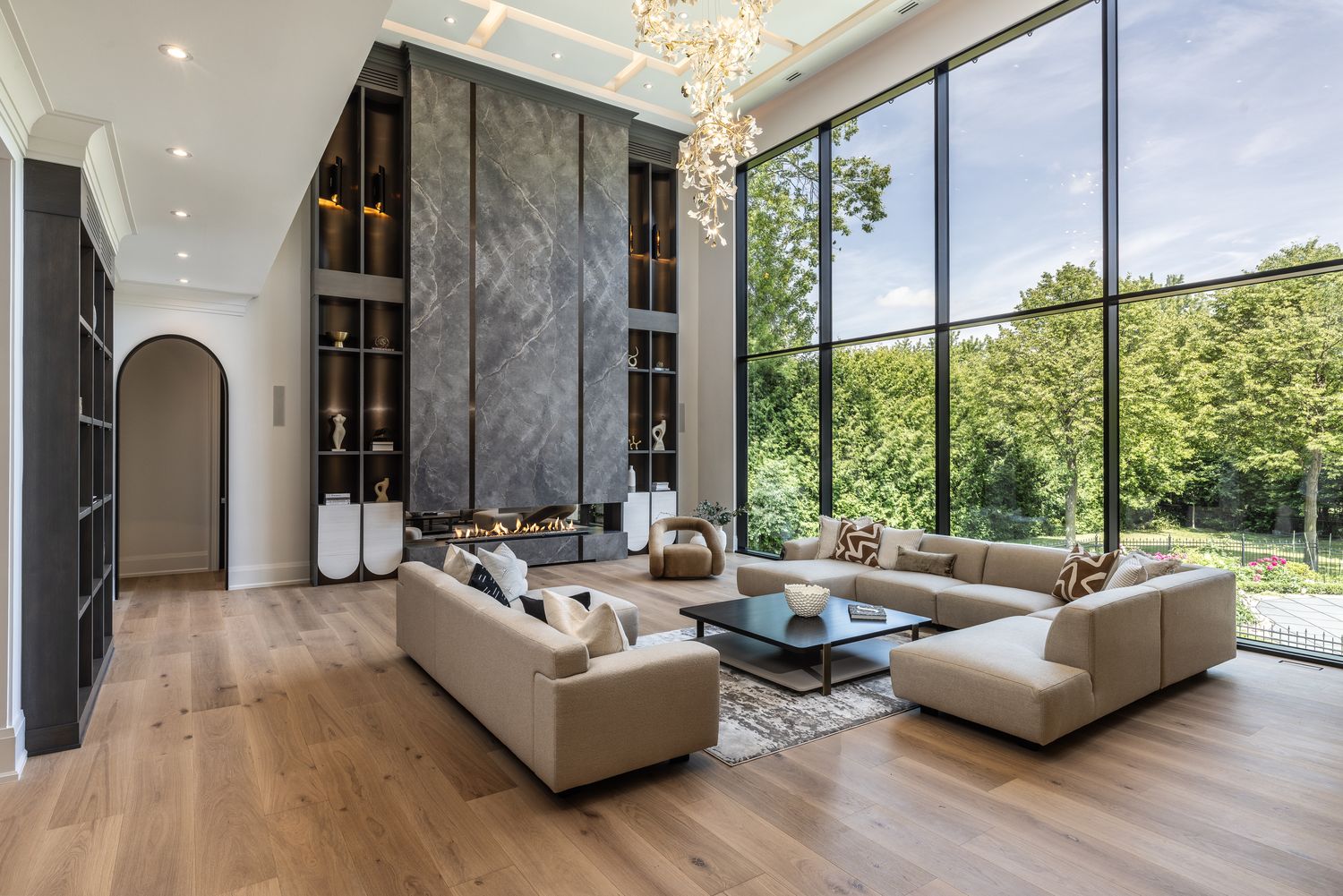
Wide plank hardwood shows the wood itself. With fewer joints across a room, you see longer runs of grain, more of the tree's natural movement, and a calmer floor. Here is what counts as wide plank, how wide to go in a Toronto home, and why construction matters more as boards get wider.
At a glance
Planks between six and ten inches are generally called wide plank. Six to eight inches suits small and medium rooms; eight inches and more suits open plans; ten inches is for large, generous spaces. In Canada, choose an engineered board with a thick, stable base, and keep indoor humidity steady.
What is wide plank flooring?
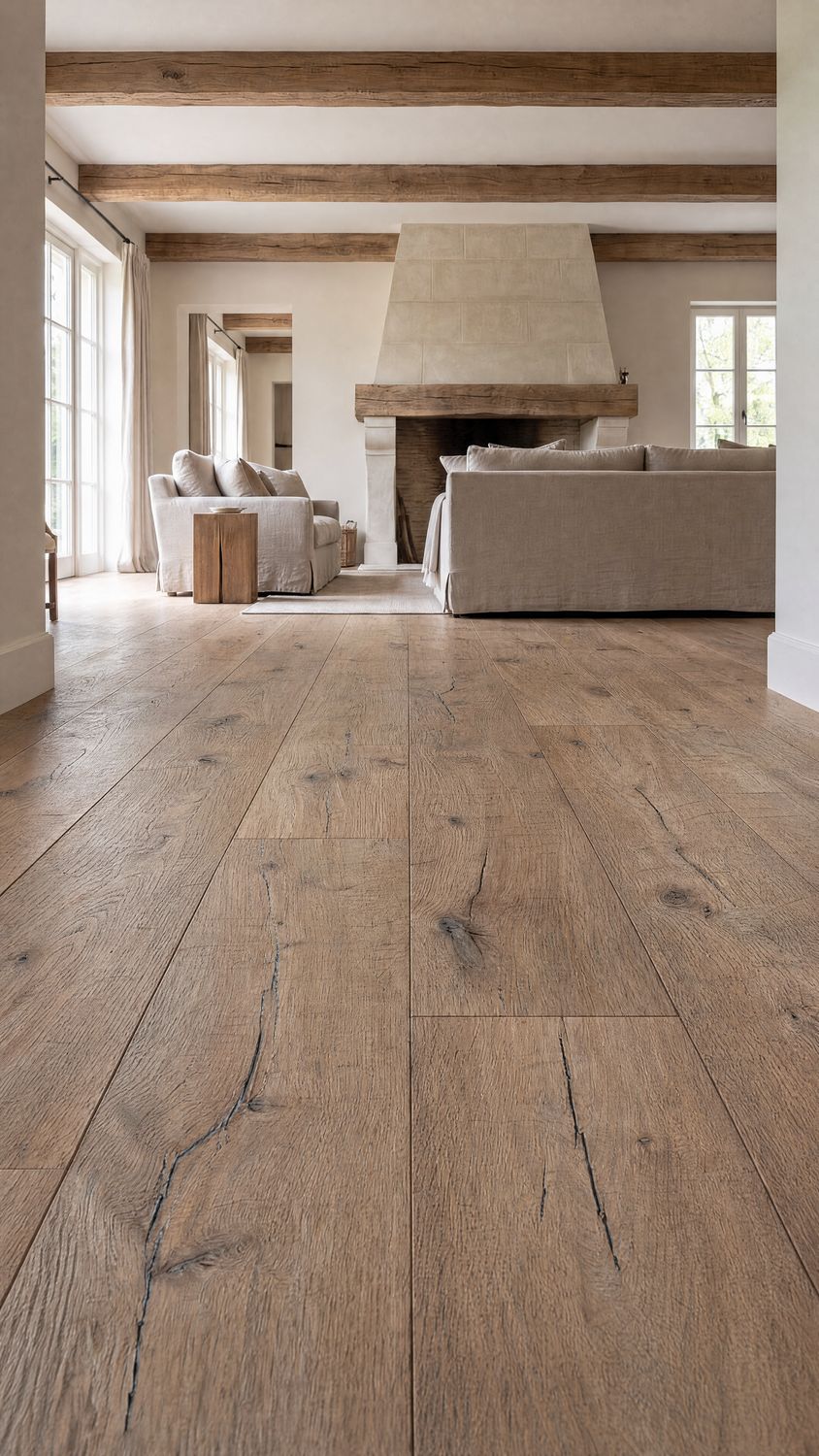
For most of the last century, Canadian houses were floored in strips two to three inches wide. Today, boards from about six inches up to ten are considered wide plank, and wider custom boards can be made. The effect is immediate: fewer lines, bigger surfaces, and a floor that feels open and natural rather than busy.
How wide should you go?
| Room | A good starting width | Why |
|---|---|---|
| Condominium rooms, bedrooms, offices | 6 to 8 inches | Looks generous without overwhelming the room; helps small spaces feel larger |
| Open-plan ground floors | 8 inches or more | Keeps scale with the space and reduces the number of joints |
| Large principal rooms and estates | Up to 10 inches, or custom | Gives a true sense of grandeur |
| Herringbone or chevron | About 5½ inches | Best proportion for the pattern |
Ceiling height, window size and furniture also play a part. A tall, bright room carries a wide board easily; a low room often looks better at six or seven inches. Length matters too. Long boards stretch a room, while short ones break it up.
Why wide planks need better construction
Wood moves across its width when humidity changes, and the wider the board, the more it can move. A solid ten-inch board in a Toronto house would be likely to cup or gap through the seasons. That is why good wide plank floors are engineered: a real hardwood surface on a layered base that resists movement.
Khayeri planks are European White Oak and Ash on a thick marine Baltic ply support layer. The timber is dried slowly, over much longer than is usual for mass-market engineered hardwood, and the two support structures we use were both designed for the Canadian climate. See engineered hardwood flooring for how the boards are built.
A wide plank project: the Thornhill Estate
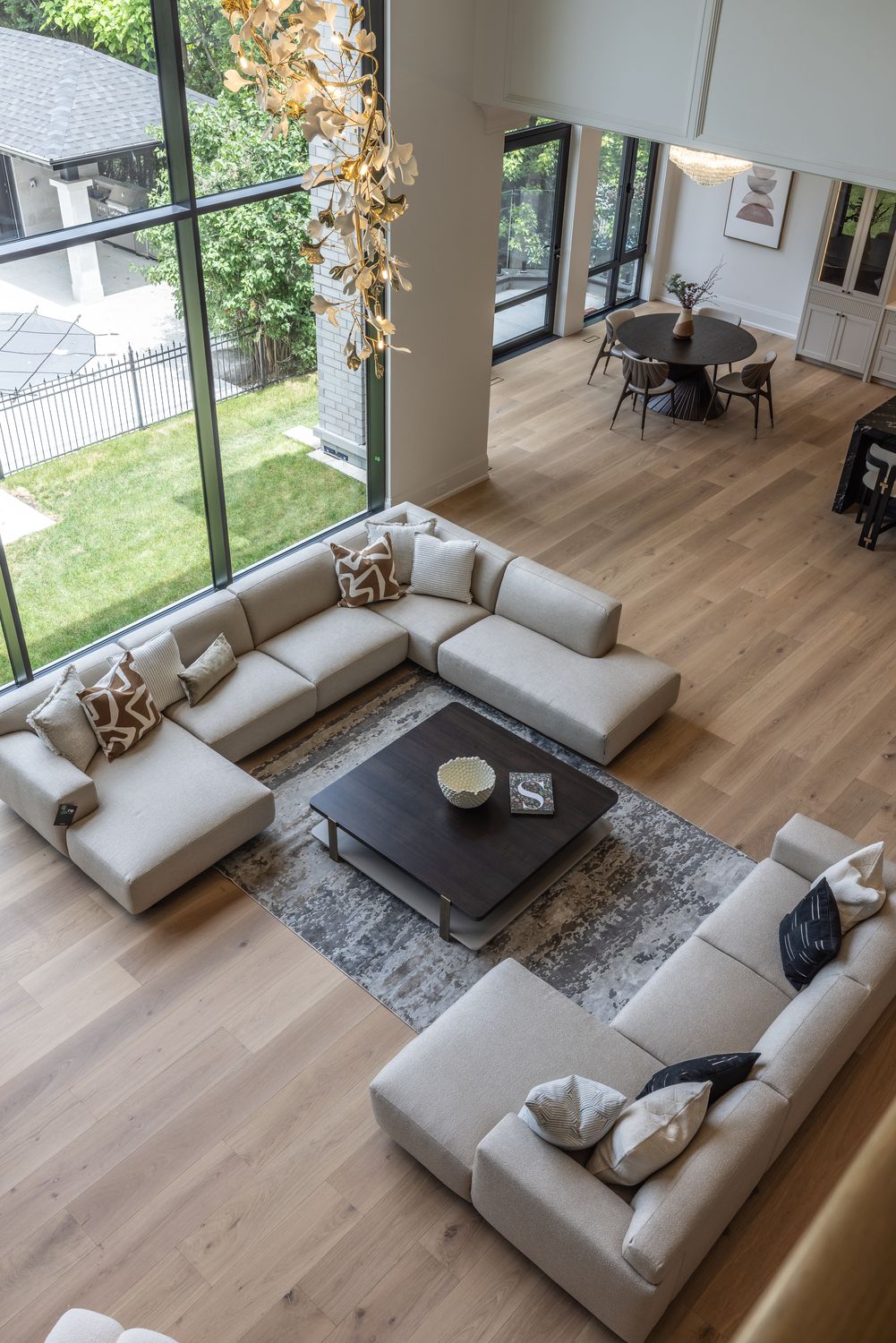
At the Thornhill Estate in Thornhill, Ontario, we worked with Lawrence Park Development on a floor of 10-inch custom ultra-wide European planks, with a herringbone accent in a matching custom tone. Keeping both formats in exactly the same colour created a seamless flow across the whole house. The boards are European-made to withstand Canadian humidity shifts. See it in our project portfolio.
Tones and grades for wide boards
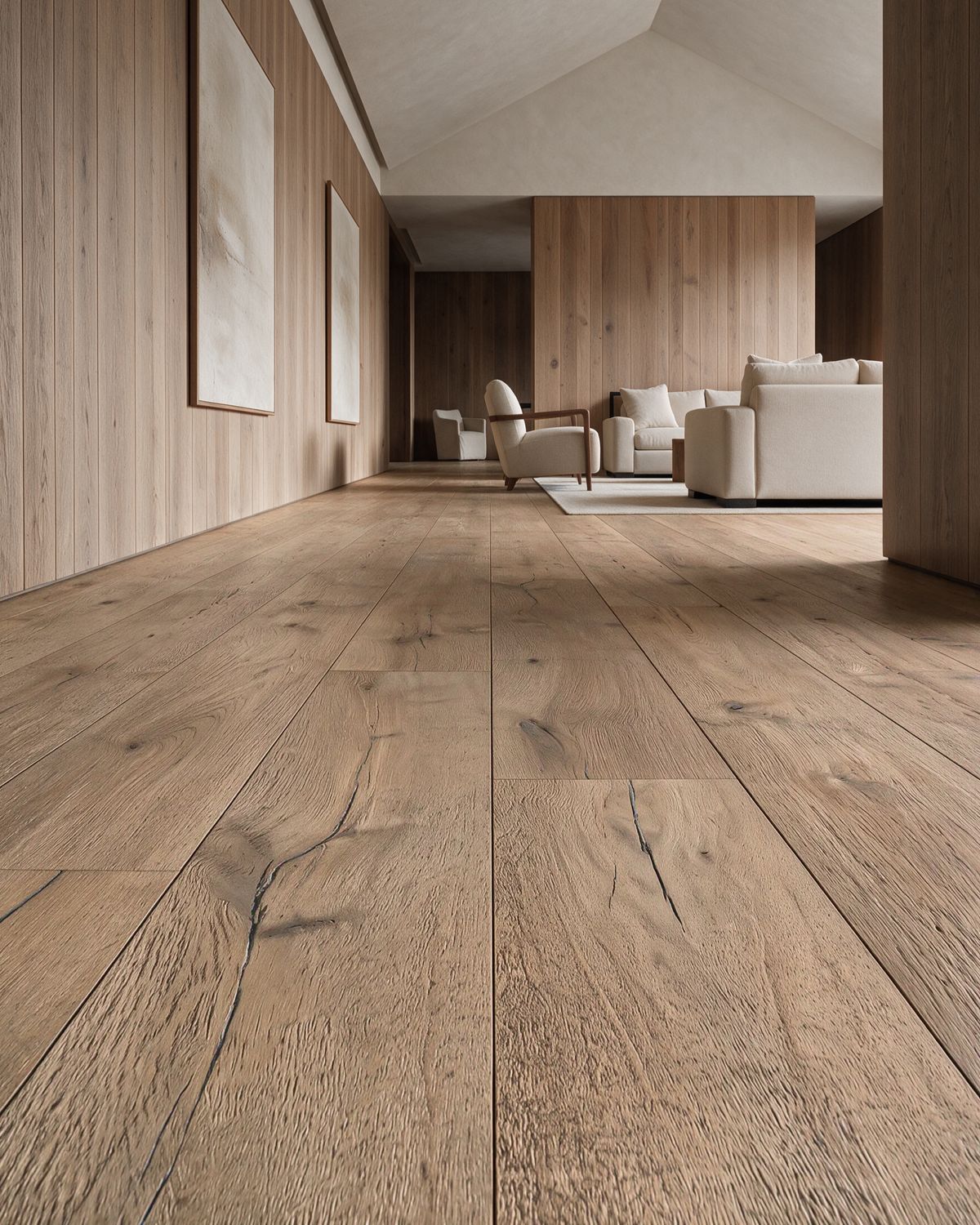
Because you see more of each board, the grade matters more in wide plank than in narrow strip. Select boards are clean and quiet. Rustic boards show knots and colour variation, and look wonderful at eight inches and up. Our Memories of Scandinavia collection offers pale European oak in wide plank; Memories of Versailles brings warmer, French-inspired character boards in the Chateau and Palace collections. For genuinely old wood, there is our 300-year-old reclaimed oak. Most clients choose white oak or French oak.
Installing wide plank flooring
Wide boards show every unevenness beneath them, so the subfloor must be flat, dry and sound. Boards are normally glued down, or glued and nailed, rather than nailed alone, because a wide board needs holding across its full width. In a condominium, an acoustic underlay may be required. Boards should acclimatize on site, with the heating or cooling running, before they are laid.
Direction matters as well. Running planks along the longest wall, or toward the main window, usually looks best. Where the floor continues between rooms, we plan one direction for the whole level so the boards line up at the doorways.
Comparing installers? Our list of questions to ask before hiring one will help. At Khayeri, floors are laid by our own certified team.
Wide plank in different Toronto homes
In open-plan new builds, wide boards running the length of the ground floor make the house feel larger. In older houses, check the subfloor first: sloping joists and patched boards need levelling before wide planks go down. In condominiums, six to eight inches is usually the best proportion, glued or over an approved underlay. In cottages and country homes, rustic grades at eight inches and more look settled from the first day.
Mistakes to avoid
- Choosing the widest board because it is the widest. Match it to the room.
- Buying solid wide boards for a house without steady humidity.
- Nailing wide boards without adhesive.
- Laying boards before the house is dry, heated and at its normal humidity.
- Skipping spare boards from the same batch for future repairs, which is the only way to be sure of a perfect match.
Looking after wide planks in a Toronto winter
Dry, heated winter air is the main risk. Aim for roughly 30 to 50 per cent relative humidity, as the National Wood Flooring Association recommends; a humidifier on the furnace, with a simple hygrometer in the main room, makes the difference. In summer, use air conditioning or a dehumidifier. Small seasonal gaps that close again are normal for any wood floor.
Wide plank flooring across Canada
Our showroom is in Toronto, and our project films include homes in the GTA, Muskoka and Niagara. Boards travel to Canada by ocean and local rail and are kept in a temperature-controlled warehouse before delivery. If your project is elsewhere in Ontario or Canada, ask us how we can help.
Is wide plank right for you?
It suits homes that want calm, natural surfaces, and rooms with space and light. If your rooms are small and formal, or you love pattern, herringbone may serve you better. Our journal article asks the question room by room: Is Wide Plank Flooring Right for Your Space?
Choosing your planks with Khayeri
- Private showroom consultation. Book a visit to our Castlefield gallery, see full-size boards and talk through the project one-on-one.
- Samples in your own light. Take samples home and look at them in the morning, at dusk and under your lamps before deciding.
- Site assessment. We look at the subfloor, moisture and layout, so the floor is specified correctly for each room.
- Installation by our certified in-house team. One team from start to finish, coordinated with your builder or designer.
- Aftercare. Every Khayeri floor is backed by a lifetime warranty, and we stay available for care advice.
Photographs cannot show you scale. Book a private consultation and stand on the boards at 1310 Castlefield Avenue before you decide.
Sources and further reading: National Wood Flooring Association on indoor climate and wide plank installation.
Frequently asked questions
How wide is wide plank flooring?
Boards from about six to ten inches are generally considered wide plank. Custom boards can go wider; at the Thornhill Estate we used 10-inch custom planks.
Is wide plank flooring better than narrow strips?
It depends on the room. Wide plank looks calmer and more open and shows more grain. Narrow strips and patterns suit small, formal or period rooms.
Do wide plank floors warp in Canada?
A well-made engineered wide plank, properly installed and kept at steady humidity, stays flat. Very wide solid boards are far more likely to cup or gap.
Can wide plank flooring be used in a condo?
Yes. Engineered wide plank can be glued to the slab or laid over an acoustic underlay. Check your building’s rules before ordering.
Where can I see wide plank flooring in Toronto?
At the Khayeri showroom, 1310 Castlefield Avenue, by appointment. You can compare widths and tones on full-size boards.

Khayeri Curated Flooring — founded by Mehran Khayeri, Khayeri has curated luxury European engineered hardwood in Toronto since 2001, from its showroom at 1310 Castlefield Avenue. Members of the National Wood Flooring Association (NWFA); every floor is installed by our certified in-house team and backed by a lifetime warranty.