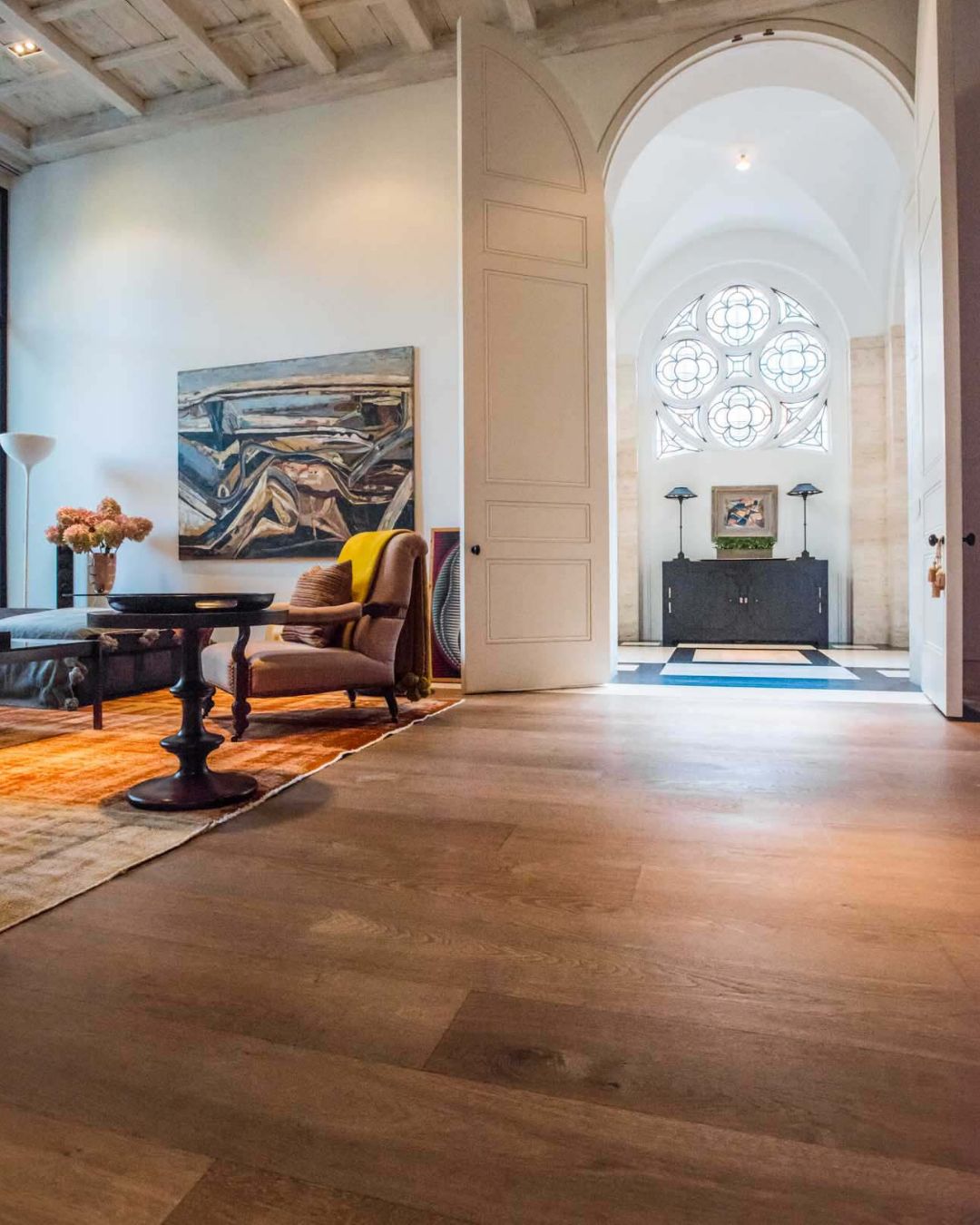
French oak has been prized for centuries: in the châteaux of the Loire, in shipbuilding, and in the barrels that age great wine. As a floor, it brings warmth, depth and a fine, flowing grain that new rooms rarely have by themselves. This page explains what French oak is, how it differs from other oaks, and how to choose a French oak floor in Toronto.
At a glance
French oak is European white oak grown in France's managed forests. Compared with North American white oak, it is usually a little warmer in colour, with a tighter, more expressive grain. For Toronto homes, choose it as an engineered board; decide between clean, characterful or reclaimed; then settle the tone and finish in your own light.
What is French oak?
French oak is the common name for European white oak grown in France. Its forests have been managed for generations, and trees are given the time to grow slowly. An oak takes an average of 180 years to reach maturity. That slow growth is what gives the timber its fine, even rings and straight, elegant grain.
All of Khayeri's French White Oak is ethically sourced from forests with sustainable growth certification. Stewardship programs there have been so effective that genuine French White Oak has become one of the most sustainable hardwoods in the world. Our journal tells the longer tale in Eternal, Mythical: The Story of French White Oak.
French oak compared with other oaks
| Oak | Colour | Character | Good for |
|---|---|---|---|
| French white oak | Warm straw to light brown | Fine, flowing grain; gentle knots | Classic, transitional and warm contemporary rooms |
| Other European white oak | Neutral to warm | Straight, calm grain | Scandinavian and minimal rooms |
| American white oak | Neutral, slightly grey-brown | Straight, a little harder | Contemporary rooms |
| Red oak | Pink to reddish | Bold, open grain | Matching older Toronto floors |
French and European white oak are the same species, so differences come from the forest, the age of the tree, the cut and the finish. For a broader look at the family, see white oak flooring.
Three ways to have a French oak floor
1. Memories of Versailles
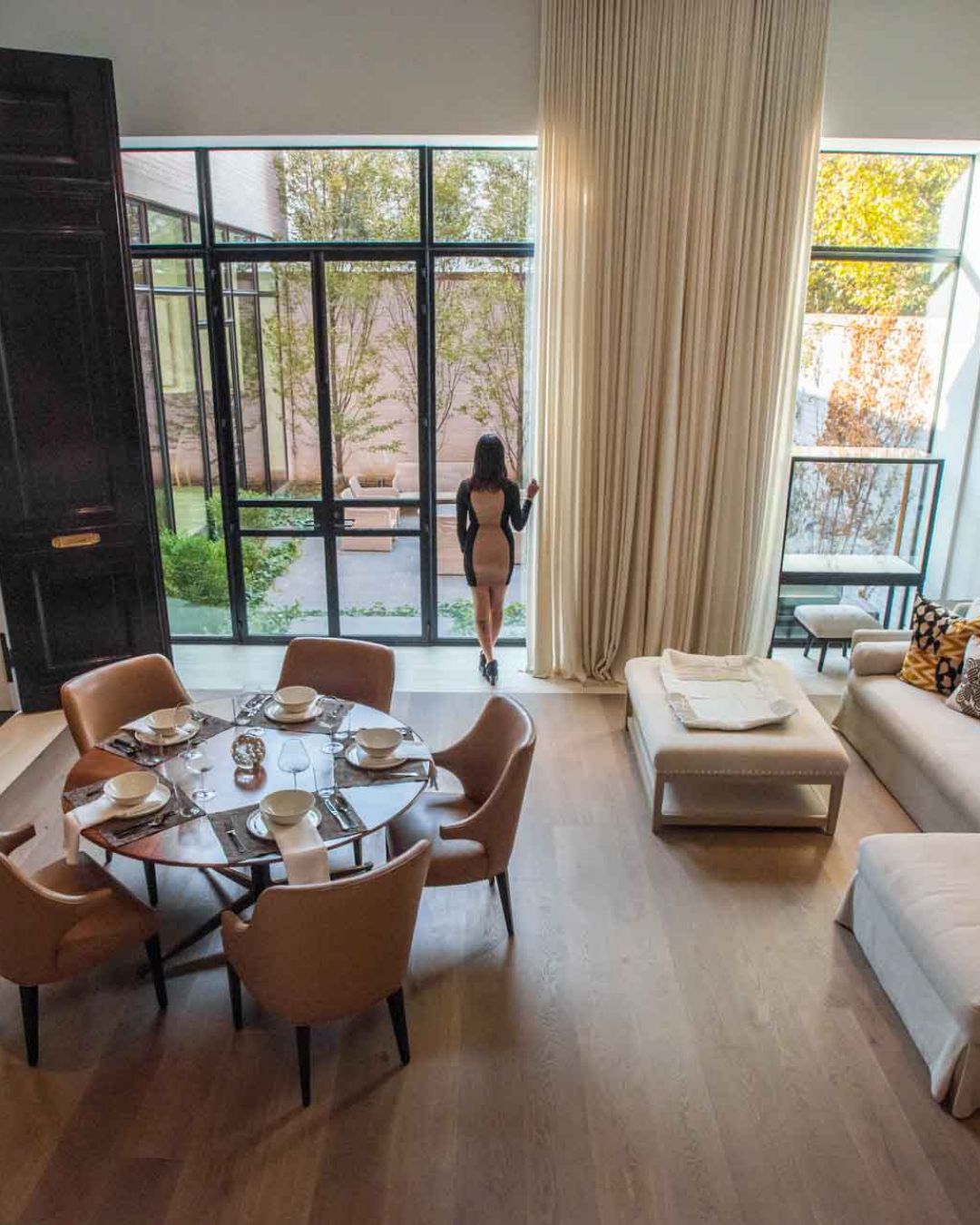
Our Memories of Versailles collection is French-inspired character oak in two families. Chateau is Select grade: refined, with a little natural movement. Palace is Furniture grade: richer, with a worked, hand-finished feel. Both come in light, medium and dark tones.
2. Reclaimed French white oak
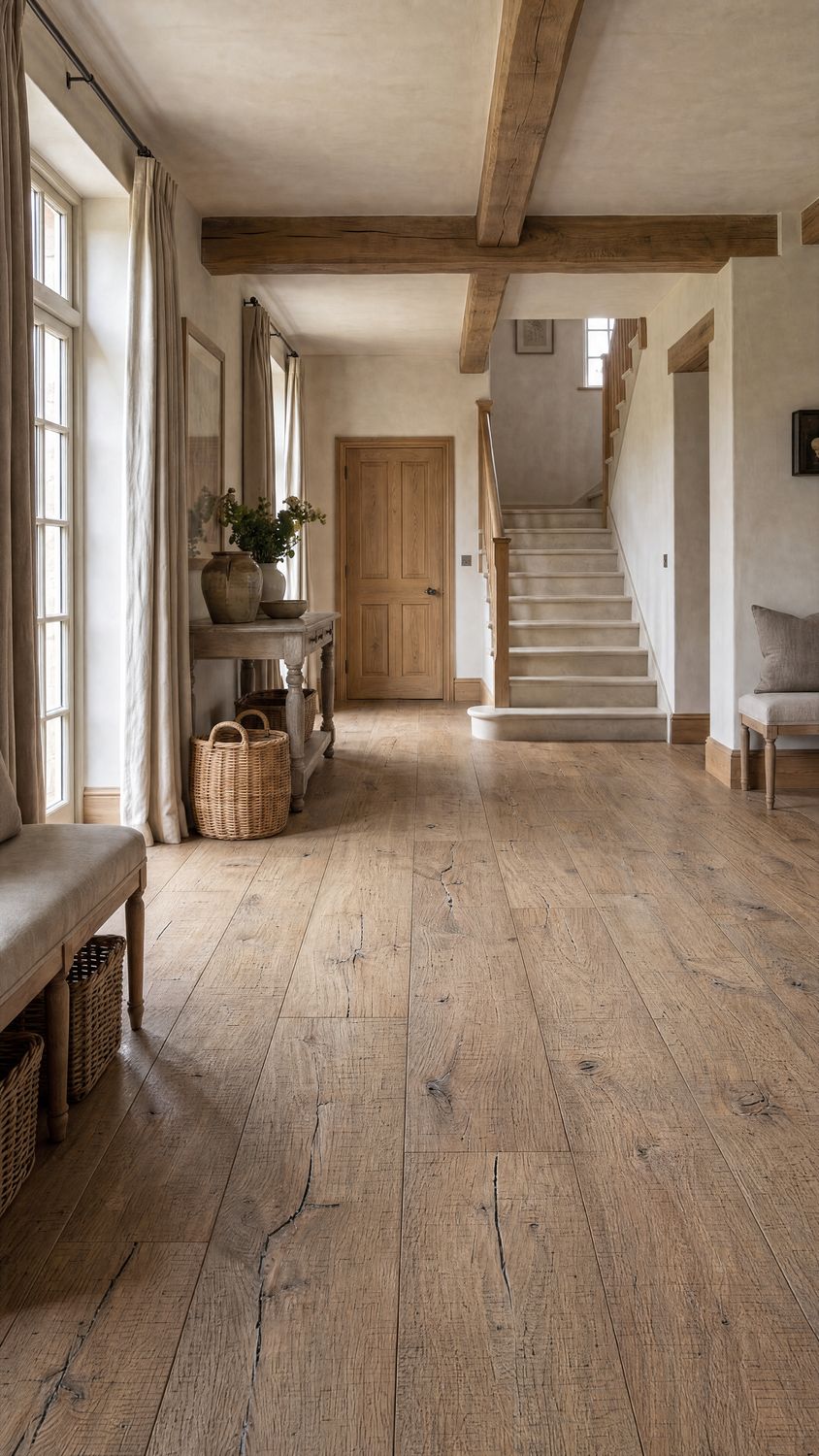
Some floors have already lived a life. Our Reclaimed collection was recovered from a barn built about 300 years ago in Lower Brittany from local old-growth white oak, then stored and carefully restored. Each plank carries marks that cannot be imitated, and supply is naturally limited.
3. Made to order
Through the Bespoke Line, boards can be developed for one project: a particular tone, a custom width, or a pattern. At the Thornhill Estate, the planks and the herringbone were both produced in a matching custom colour.
From forest to floor
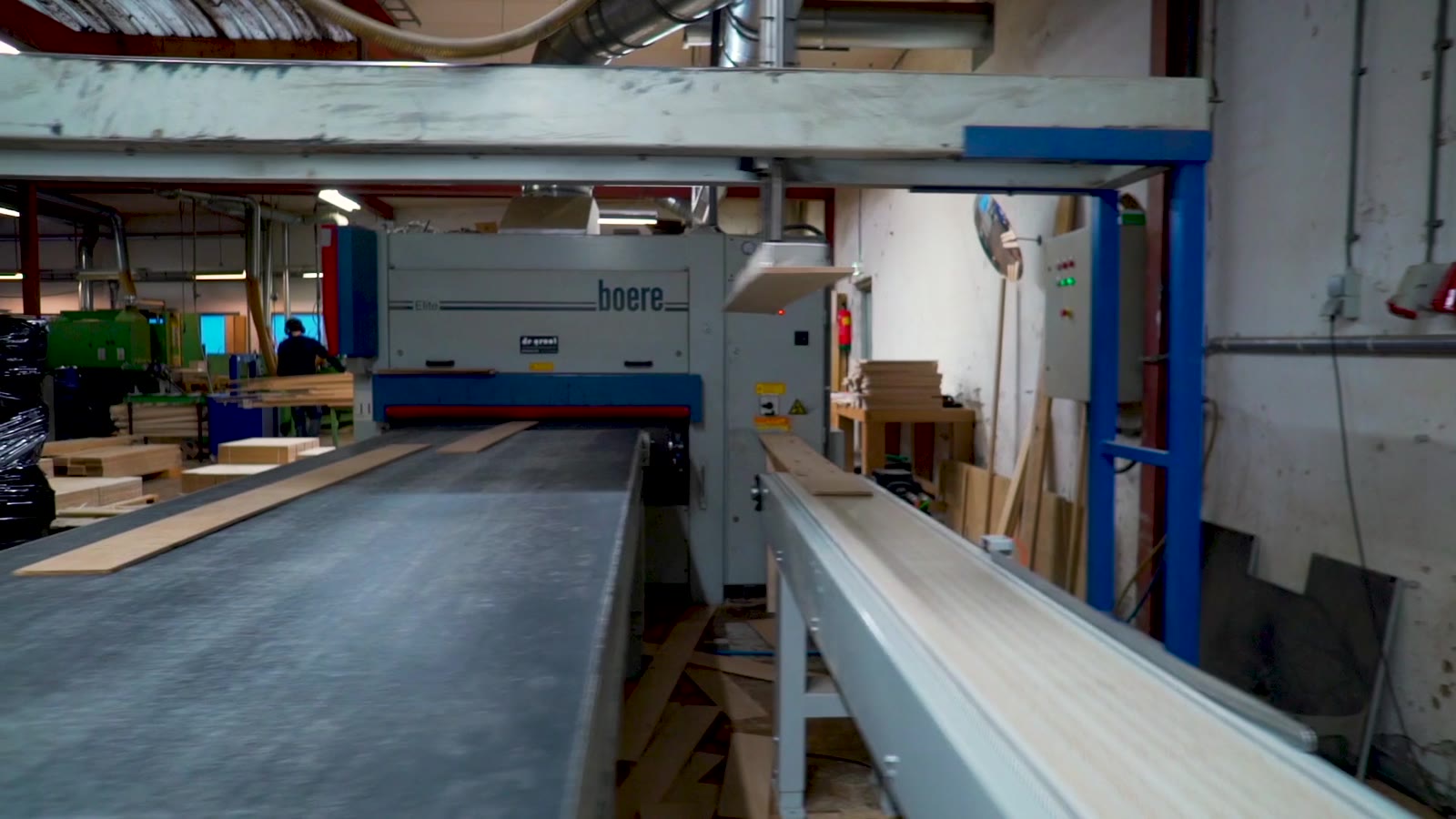
Where and how a board is made is as important as the tree. Our timber is processed in the Netherlands, in sawmills governed by strict ecological standards, rather than in distant factories. It is kiln dried slowly, over a much longer time frame than is used for the engineered hardwood sold in big box stores, so that moisture leaves the wood gently. The oak is then layered onto a thick marine Baltic ply base, finished by hand with our own stains and treatments, and shipped to Canada by ocean and rail to a temperature-controlled warehouse. You can watch each stage in The Journey.
Choosing a tone and finish
French oak is at its best when the finish lets the grain through. Natural oils keep it matte and tactile and can be refreshed in place. Pigmented oils shift the tone, from pale and chalky to deep brown. Aluminum oxide finishes need the least maintenance. Ask to see the same board in two finishes; the difference is greater than in a photograph.
- Light tones bring out the straw colour and suit plaster, limestone and linen.
- Medium tones read as classic French interiors: warm, settled, easy to furnish.
- Dark tones feel like old libraries; give them good light.
Formats: plank, herringbone, chevron
French interiors are famous for patterned floors, and herringbone and chevron remain natural partners for French oak. In newer Toronto homes, wide plank is the more common choice, and the two can be combined in one tone. Bring a plan of your rooms and we will suggest where each belongs.
French oak in a Toronto home
As an engineered board, French oak works in houses and condominiums, over wood subfloors and concrete, and with suitable radiant heating. Keep the house near 30 to 50 per cent relative humidity, as the National Wood Flooring Association advises. Neighbourhoods with period homes, such as Forest Hill and Rosedale, are a particularly good match for its warmth.
Decorating around French oak
French oak is forgiving company. Its warmth flatters plaster whites, clay, olive and deep blue, and it sits easily beside limestone, marble, aged brass and blackened steel. If your kitchen is also wood, choose a floor that is clearly lighter or darker than the cabinets, rather than nearly the same. Rugs with a low pile let the grain show at the edges of a room. Designers are welcome to bring schemes and finishes to the showroom; our Creators (A+D) program is there for them.
Caring for a French oak floor
Vacuum grit, lift furniture rather than sliding it, and clean with a product suited to the finish. Oiled French oak can be refreshed in a worn area without sanding the whole room, which makes it easy to live with for decades. Read how to avoid damage to your hardwood flooring for daily habits.
Questions worth asking any supplier
- Where was the oak grown, and is the forest certified?
- Where was it milled, dried and finished?
- How thick is the hardwood surface, and what is the base made of?
- Can I see several full-size boards, not one sample?
- Who will install it, and what does the warranty cover?
Seeing French oak with Khayeri
- Private showroom consultation. Book a visit to our Castlefield gallery, see full-size boards and talk through the project one-on-one.
- Samples in your own light. Take samples home and look at them in the morning, at dusk and under your lamps before deciding.
- Site assessment. We look at the subfloor, moisture and layout, so the floor is specified correctly for each room.
- Installation by our certified in-house team. One team from start to finish, coordinated with your builder or designer.
- Aftercare. Every Khayeri floor is backed by a lifetime warranty, and we stay available for care advice.
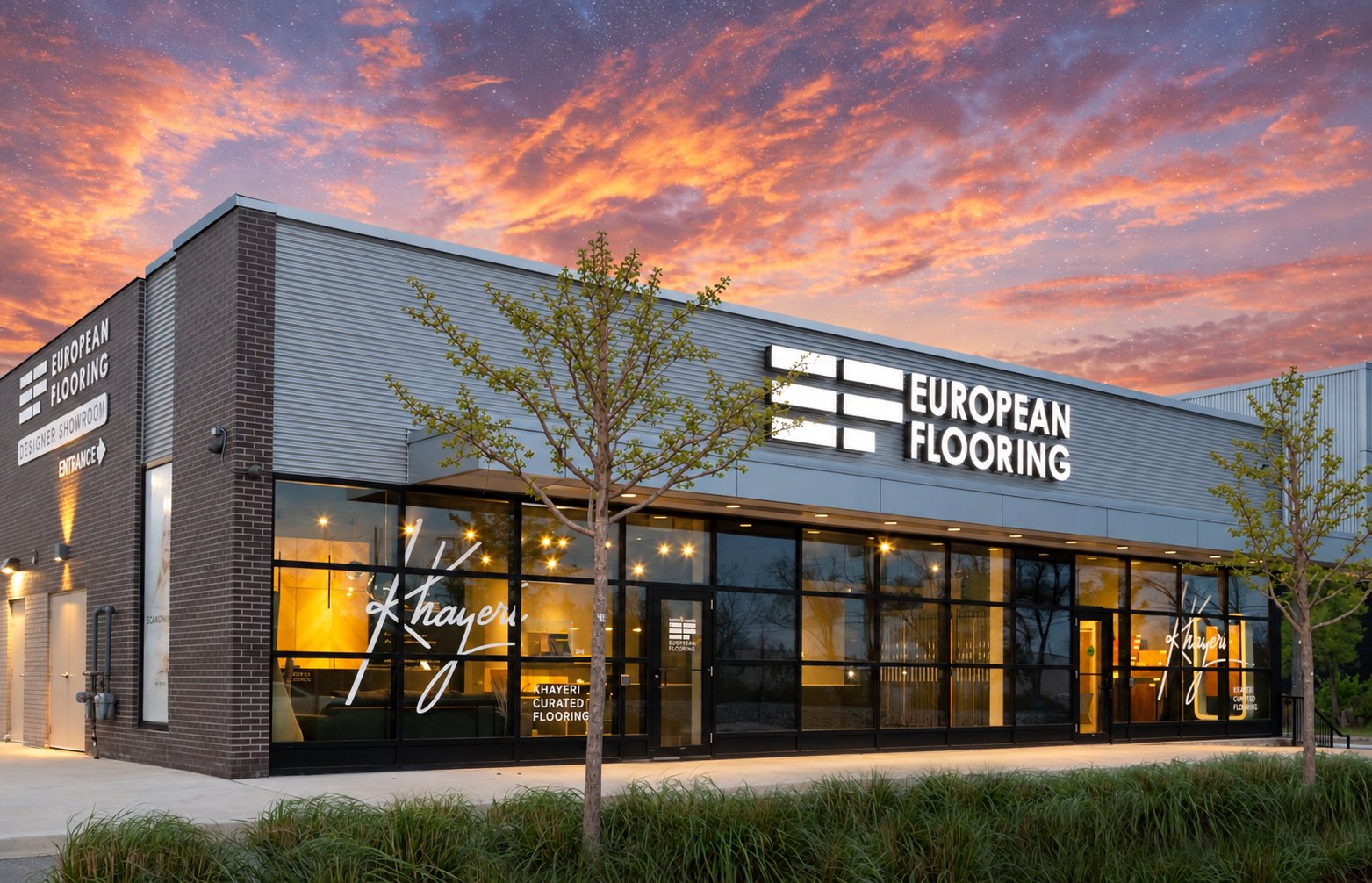
Our boards are at 1310 Castlefield Avenue, in the Castlefield Design District. Book a private consultation, or look through the Gallery first and bring a shortlist.
Sources and further reading: PEFC and FSC Canada on certified European forests; National Wood Flooring Association on indoor climate.
Frequently asked questions
Is French oak the same as white oak?
French oak is a European white oak grown in France. It is a close relative of American white oak, usually a little warmer in colour, with a fine, flowing grain.
Is French oak flooring durable?
Yes. Oak has been used for hard-wearing floors for centuries. As an engineered board it also stays stable through Toronto’s seasons.
Is French oak sustainable?
French forests are carefully managed, and all of our French White Oak comes from forests with sustainable growth certification. Many of our collections carry FSC or PEFC certification.
Do you sell reclaimed French oak?
Yes. Our Reclaimed collection is French white oak recovered from a 300-year-old barn in Lower Brittany. Supply is limited, so it is best seen in person.
Where can I buy French oak flooring in Toronto?
At the Khayeri showroom, 1310 Castlefield Avenue, by private appointment. Call (416) 967-9200 or book online.

Khayeri Curated Flooring — founded by Mehran Khayeri, Khayeri has curated luxury European engineered hardwood in Toronto since 2001, from its showroom at 1310 Castlefield Avenue. Members of the National Wood Flooring Association (NWFA); every floor is installed by our certified in-house team and backed by a lifetime warranty.