Engineered hardwood is real hardwood. The surface you see, walk on and care for is a layer of solid oak or ash; beneath it, a stable ply base keeps the board flat through humid Toronto summers and dry, heated winters. It is what Khayeri has specialized in since 2001, and for most Toronto houses and condominiums it is the right choice.
At a glance
Choose engineered hardwood in Toronto when you want wide boards, when the floor goes over concrete, condo slabs, a basement or radiant heat, or when you need a herringbone or chevron floor that stays tight. Compare the species, the thickness of the hardwood surface, the base, the finish and the installation — in that order.
What engineered hardwood flooring is made of
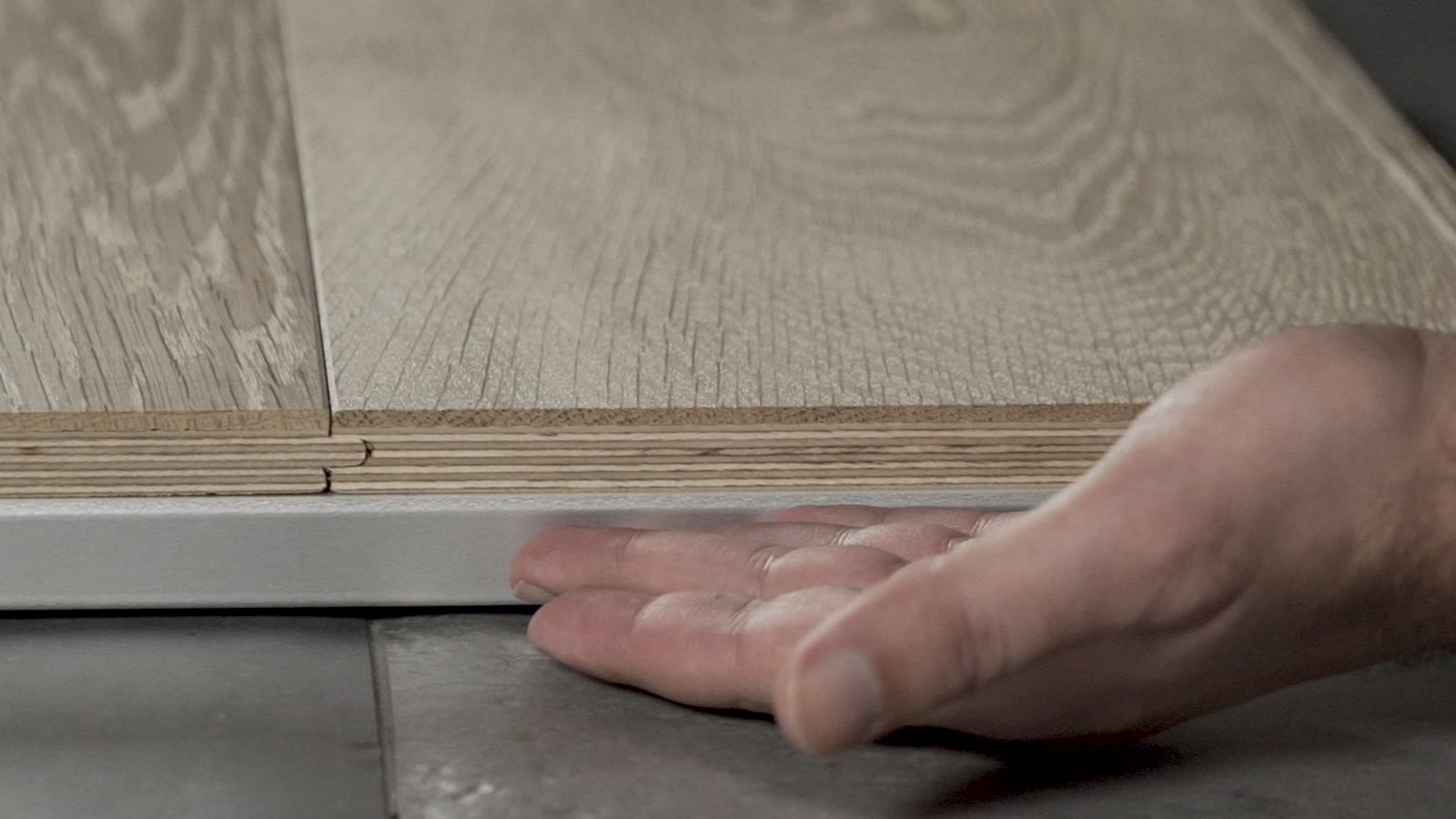
Every engineered board has two parts. The hardwood surface (also called the wear layer) decides how the floor looks, how it ages and whether it can be refinished. The support layer decides how stable the board is. Inexpensive boards save money on both: a paper-thin veneer over soft fibreboard.
Khayeri boards are built differently. European White Oak and Ash are layered onto a thick marine Baltic ply support layer for structural stability, and there are two types of support structure, both designed for the swings of the Canadian climate. Our team helps you choose the one that suits your home.
Why it suits Toronto homes
Indoor humidity in Toronto can swing a long way between July and January. Solid wood moves with it: boards swell across their width in summer and shrink in winter, which shows up as cupping or gaps. The crossed layers in an engineered board hold it in check, so it moves far less. The National Wood Flooring Association recommends keeping a home between roughly 30 and 50 per cent relative humidity; an engineered floor is more forgiving when a house drifts outside it.
Condominiums and concrete
Most Toronto condominiums sit on concrete slabs, where nailing a solid floor is not an option. Engineered boards can be glued down or installed over an acoustic underlay that meets your building's sound rules. Our floors are in more than 9,000 condominium and hotel suites, including One Bloor, 85 Bloor Street and the St. Regis.
Basements and radiant heating
Below grade, and over in-floor heat, stability is everything. Engineered hardwood is the standard recommendation in both cases, provided the slab is dry, the heat is brought up gradually and the surface is kept within the manufacturer's limit. Tell us about heating early, so the board, adhesive and underlay are chosen together.
Houses and custom builds
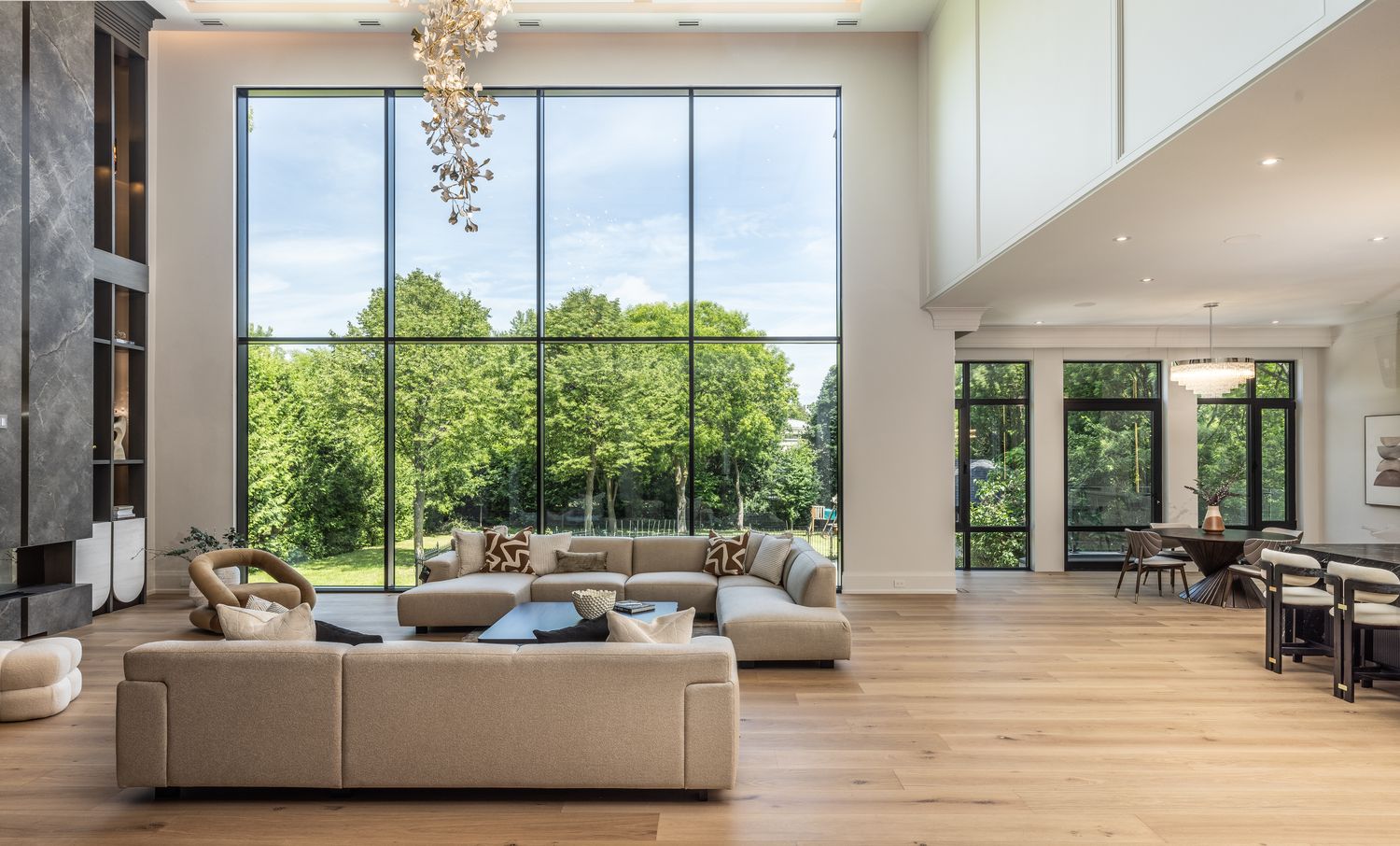
In a detached house, engineered construction is what makes very wide boards practical. At the Thornhill Estate, our 10-inch custom planks run through the principal rooms and meet a herringbone in exactly the same tone.
Types of engineered hardwood flooring
| Type | Best for | Where to see it |
|---|---|---|
| Wide plank | Open, calm rooms; new builds; large principal spaces | Wide plank flooring |
| Herringbone and chevron | Halls, dining rooms, offices; period and contemporary homes | Herringbone & chevron flooring |
| White oak | Light to dark tones with a quiet, even grain | White oak flooring |
| French oak | Warm, characterful, classic interiors | French oak flooring |
| Scandinavian | Pale, natural, light-filled rooms | Memories of Scandinavia |
| Bespoke and end grain | Feature rooms and floors made to order | Bespoke Line |
| Reclaimed | Genuine age and history underfoot | 300-year-old reclaimed oak |
How to judge quality before you buy
Two engineered floors can look alike on a small sample and behave very differently in ten years. Ask about:
- Species and origin. Khayeri uses European White Oak and Ash, ethically sourced from forests with sustainable growth certification.
- The hardwood surface. Its thickness decides how many times a floor can be refinished. Ask for the figure in millimetres for the exact board you are considering.
- The base. Ply with several crossed layers is more stable than fibreboard. Ours is marine Baltic ply.
- Drying. Our timber is kiln dried slowly, over a much longer time frame than is used for the engineered hardwood sold in big box stores, so it is stable before it reaches Canada.
- Grade. Select boards are clean and even; Rustic and Furniture boards show knots and movement. Our Flooring Guide explains each grade.
- Finish. Natural oils, pigmented oils and aluminum oxide finishes each look and wear differently.
- Air quality. Look for EC-1 low-emission certification and floors free of harmful VOCs.
- Who installs it. A good floor can be ruined by a poor installation. Ours are laid by our certified in-house team.
Engineered or solid?
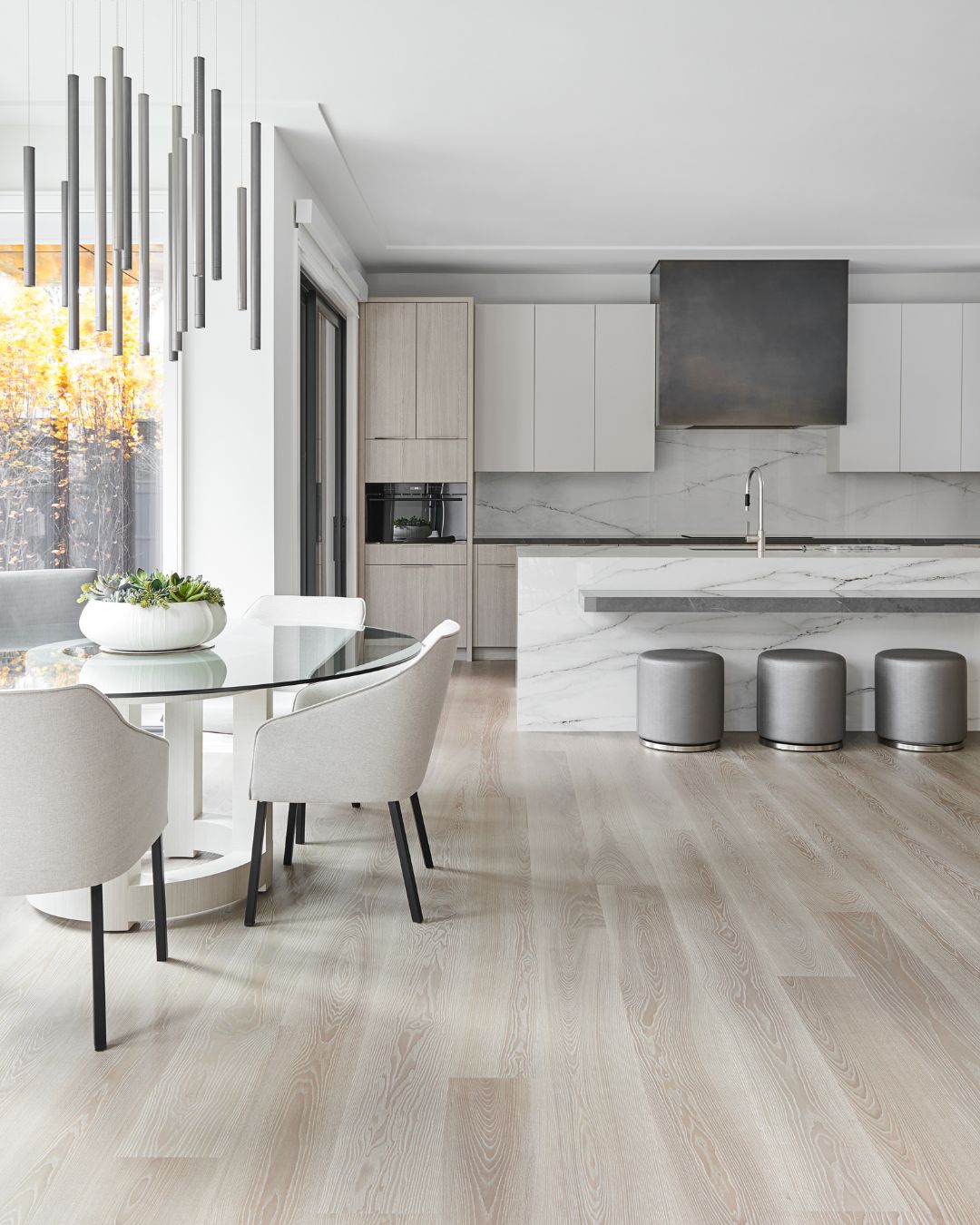
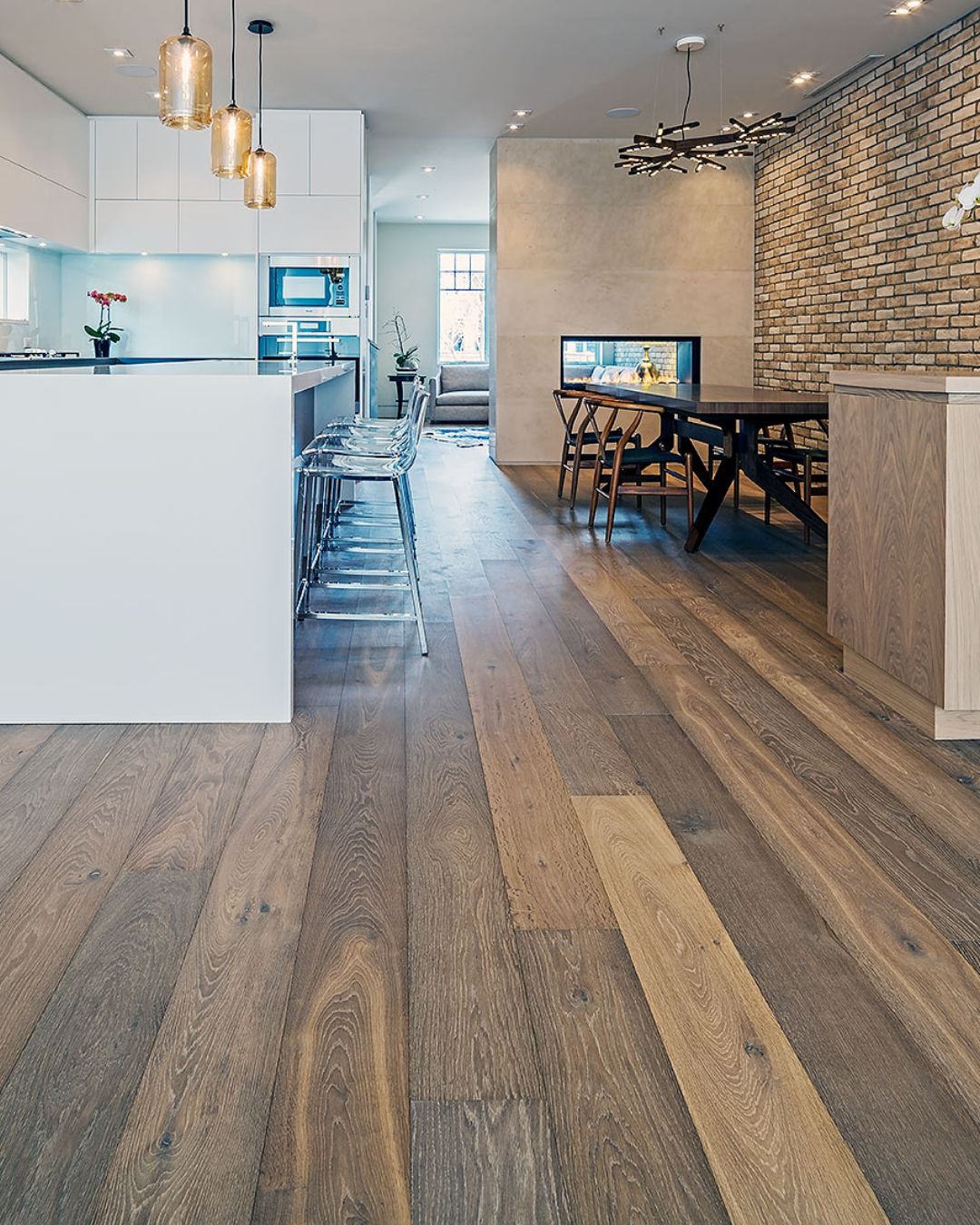
Solid hardwood can be sanded more often and has a long history in older Toronto houses. Engineered hardwood is more stable, can be made wider, and can go almost anywhere. We compare the two room by room in Engineered vs Solid Hardwood: Which Is Right for a Toronto Home?
Engineered hardwood across Toronto
The right specification changes from one neighbourhood to the next. In Rosedale and Yorkville we might be restoring a centre-hall house one week and flooring a condominium the next. In Forest Hill, older joists and generous rooms call for careful preparation and boards with presence. In North Toronto and Lawrence Park, custom builds often combine wide plank upstairs with heated floors below. Each of those guides explains how we approach the homes there.
Common mistakes to avoid
- Choosing from a small sample. Grain, knots and colour only make sense on full-size boards.
- Comparing board prices instead of installed totals, with the subfloor work left out.
- Installing before the house is dry, heated and at its normal humidity.
- Using one board everywhere, when a heated basement and a formal dining room need different things.
Caring for an engineered floor
Keep the humidity steady, put felt under furniture legs, lift heavy pieces rather than dragging them, and clean with a product made for your finish. Avoid steam mops and standing water. Our journal covers the details in How to Avoid Damage to Your Hardwood Flooring.
How it works with Khayeri
- Private showroom consultation. Book a visit to our Castlefield gallery, see full-size boards and talk through the project one-on-one.
- Samples in your own light. Take samples home and look at them in the morning, at dusk and under your lamps before deciding.
- Site assessment. We look at the subfloor, moisture and layout, so the floor is specified correctly for each room.
- Installation by our certified in-house team. One team from start to finish, coordinated with your builder or designer.
- Aftercare. Every Khayeri floor is backed by a lifetime warranty, and we stay available for care advice.
Not sure where to begin? Browse every board in the Gallery by collection, tone and grade, read what decides the cost of a hardwood floor, or book a private consultation at 1310 Castlefield Avenue.
Sources and further reading: National Wood Flooring Association on indoor climate and installation; FSC Canada and PEFC on certified forests.
Frequently asked questions
Is engineered hardwood real wood?
Yes. The surface is a layer of solid hardwood — in our case European White Oak or Ash — bonded to a ply base. Once it is installed, it looks and feels like a solid hardwood floor because the part you touch is one.
Can engineered hardwood flooring be refinished?
Often, yes. It depends on how thick the hardwood surface is. Ask for the thickness of the exact board you are considering, and we will tell you what it allows.
Is engineered hardwood good for Toronto condos?
It is usually the best choice. It can be glued to concrete or laid over an acoustic underlay. Check your condominium board’s sound requirements first; we can help you specify to them.
Does engineered hardwood work with radiant floor heating?
Yes, when the board, adhesive and underlay are chosen for it and the surface temperature is kept within the manufacturer’s limit. Let us know at the first meeting if any room is heated.
Where can I see engineered hardwood flooring in Toronto?
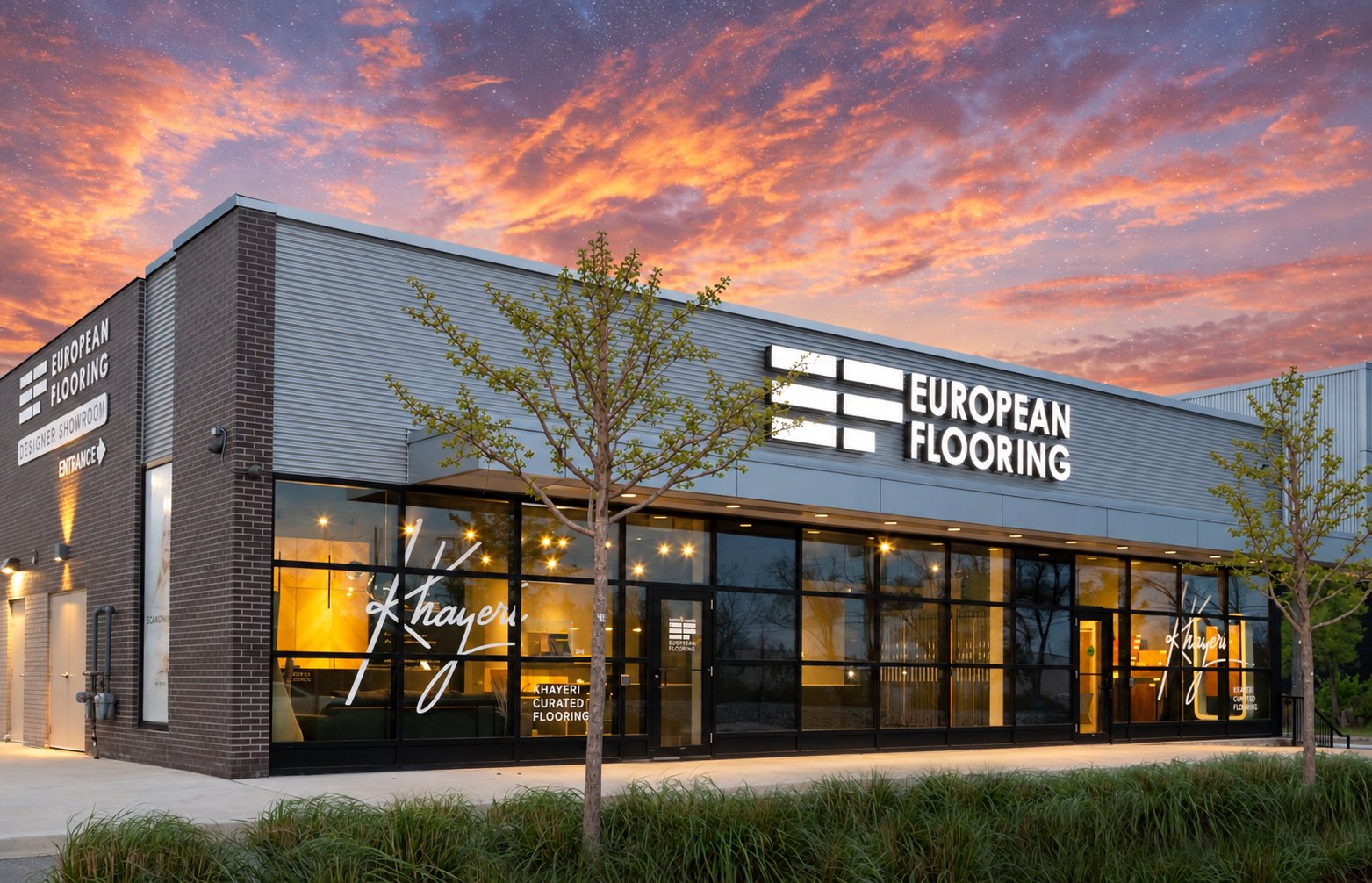
At the Khayeri showroom, 1310 Castlefield Avenue, in the Castlefield Design District. Consultations are private and by appointment: call (416) 967-9200 or book online.

Khayeri Curated Flooring — founded by Mehran Khayeri, Khayeri has curated luxury European engineered hardwood in Toronto since 2001, from its showroom at 1310 Castlefield Avenue. Members of the National Wood Flooring Association (NWFA); every floor is installed by our certified in-house team and backed by a lifetime warranty.